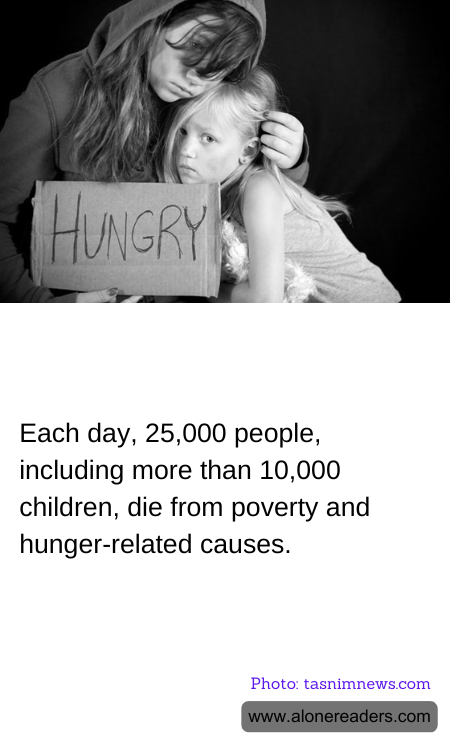
Every day, the world loses 25,000 people to the devastating grip of poverty and hunger, with more than 10,000 of these being children. This staggering statistic is a stark reminder of the persistent inequalities that plague our global society. Despite advancements in technology, medicine, and agriculture, millions of people continue to suffer from the basic lack of food and resources necessary for survival.
The causes of poverty and hunger are complex and interwoven, often rooted in systemic issues such as economic disparity, political instability, and environmental challenges. In many developing countries, limited access to education and healthcare perpetuates a cycle of poverty that is difficult to break. Families trapped in this cycle often face impossible choices, such as whether to spend their meager earnings on food or medicine, leaving them vulnerable to malnutrition and disease.
Children are particularly vulnerable in this harsh reality. Malnutrition during the critical early years of life can lead to stunted growth, weakened immune systems, and impaired cognitive development. These effects are not only devastating for the individual child but also have long-term implications for their communities and countries. A generation of children growing up without adequate nutrition and education is a generation that will struggle to contribute to their society's economic and social development.
Efforts to combat poverty and hunger have seen some success, but there is still much work to be done. International organizations, governments, and non-profits are working tirelessly to implement sustainable solutions. These include initiatives to improve agricultural productivity, provide access to clean water, and ensure that education is accessible to all children. However, these efforts require significant resources and a commitment from the global community to prioritize the needs of the most vulnerable.
Individuals can also play a role in addressing this crisis. Supporting organizations that focus on poverty alleviation, advocating for policies that promote economic equality, and raising awareness about the issue are all ways to contribute to the solution. Small actions, when multiplied by millions of people, can lead to significant change.
The loss of 25,000 lives each day to poverty and hunger is a tragedy that should not be accepted as a norm. It is a call to action for all of us to work towards a world where every person has the opportunity to live a healthy and fulfilling life. By addressing the root causes of poverty and hunger, we can create a future where no child goes to bed hungry, and every individual has the chance to thrive.
