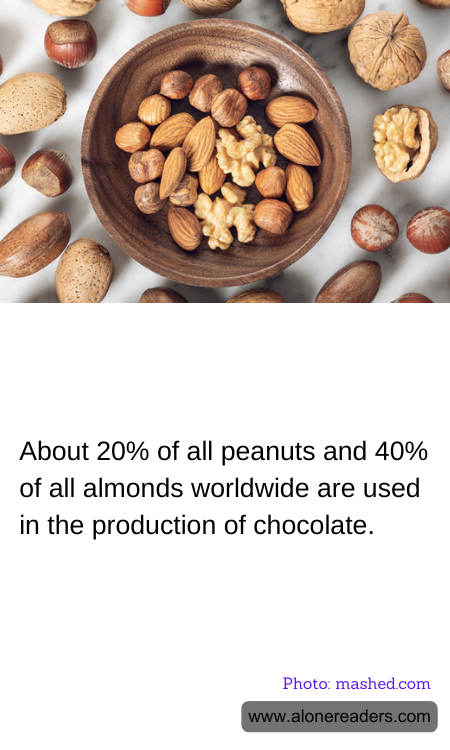
Chocolate, a beloved treat enjoyed by people of all ages around the globe, owes much of its rich and diverse flavor profile to the nuts that are often incorporated into its production. Among these, peanuts and almonds play a significant role, with about 20% of all peanuts and 40% of all almonds worldwide being used in the creation of chocolate products. This integration not only enhances the taste and texture of chocolate but also contributes to the global demand for these nuts.
Peanuts, despite being legumes, are commonly referred to as nuts and are a staple in many chocolate confections. Their creamy texture and slightly sweet flavor make them a perfect complement to the smoothness of chocolate. Whether in the form of peanut butter cups, chocolate bars with whole peanuts, or as a crunchy topping, peanuts add a delightful contrast to the melt-in-your-mouth quality of chocolate. The use of peanuts in chocolate production is not only a testament to their popularity but also highlights their versatility as an ingredient that can be adapted to various chocolate forms and flavors.
Almonds, on the other hand, are celebrated for their delicate, buttery taste and crunchy texture. They are often used in chocolate bars, pralines, and as a garnish for chocolate desserts. The high percentage of almonds used in chocolate production underscores their importance in the confectionery industry. Almonds provide a nutritional boost, offering healthy fats, protein, and essential vitamins and minerals, which can make chocolate products more appealing to health-conscious consumers. The combination of almonds and chocolate is a classic pairing that has stood the test of time, appealing to those who appreciate the balance of flavors and textures.
The significant use of peanuts and almonds in chocolate production also has economic implications. It drives the agricultural demand for these nuts, influencing farming practices and market prices. This demand supports the livelihoods of farmers and workers involved in the cultivation and processing of peanuts and almonds. Additionally, it encourages sustainable farming practices as consumers increasingly seek products that are not only delicious but also environmentally friendly.
In conclusion, the integration of peanuts and almonds into chocolate production is a testament to the enduring appeal of these nuts in enhancing the flavor and texture of chocolate. Their widespread use reflects both consumer preferences and the economic dynamics of the global food industry. As chocolate continues to evolve with new flavors and innovations, the role of peanuts and almonds remains a cornerstone, ensuring that this beloved treat continues to delight taste buds around the world.
