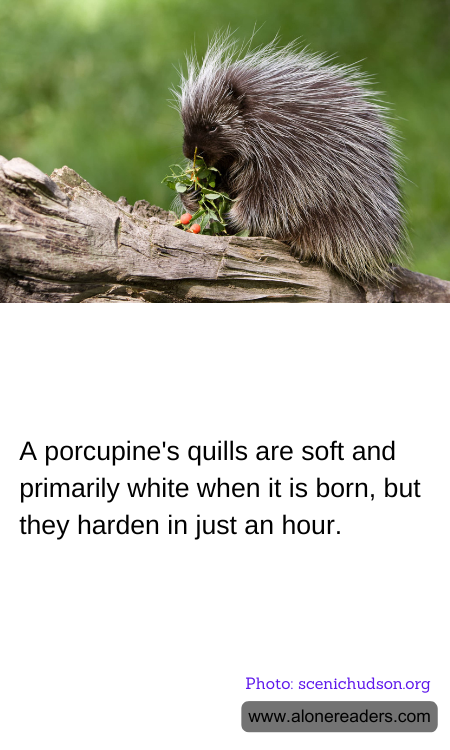
The birth of a porcupine, known as a porcupette, is a fascinating event in the animal kingdom, marked by a unique transformation that occurs within the first hour of its life. Unlike the intimidating, sharp quills that characterize adult porcupines, a newborn porcupette enters the world with quills that are surprisingly soft and primarily white. This initial softness is a crucial adaptation that ensures the safety of both the mother and the newborn during the birthing process.
The quills of a newborn porcupine are made of keratin, the same protein that forms human hair and nails. At birth, these quills are soft and pliable, allowing the porcupette to be delivered without causing injury to the mother. This temporary softness is nature's ingenious way of balancing the need for protection with the necessity of a safe birth. However, this softness is short-lived. Within just an hour, the quills begin to harden, a process that is vital for the porcupette's survival in the wild.
As the quills harden, they darken and take on the characteristic coloration that helps adult porcupines blend into their surroundings. This rapid transformation is essential, as it provides the young porcupine with its primary means of defense against predators. The hardening process is facilitated by the drying of the quills, which stiffen as they lose moisture. This quick adaptation is crucial, as porcupines are relatively slow-moving animals and rely heavily on their quills for protection.
The transformation of a porcupine's quills from soft to hard is not only a marvel of nature but also a testament to the evolutionary adaptations that have allowed porcupines to thrive in various environments. These quills, once hardened, serve as an effective deterrent against predators, who quickly learn to avoid the sharp, needle-like structures. The quills are loosely attached and can easily detach when a predator comes into contact with them, further enhancing their defensive capability.
For those who study wildlife, the porcupine's quill transformation is a reminder of the intricate and often surprising ways in which animals have evolved to survive and protect themselves. It highlights the delicate balance between vulnerability and defense that many species must navigate from the moment of birth. This remarkable process underscores the resilience and adaptability of porcupines, ensuring that even the youngest members of the species are equipped to face the challenges of their environment.
In conclusion, the transformation of a porcupine's quills from soft and white at birth to hard and protective within an hour is a captivating example of nature's ingenuity. It serves as a reminder of the complex and often hidden processes that underpin the survival of species in the wild. For those fortunate enough to witness this transformation, it is a moment that encapsulates the wonder and beauty of the natural world.
