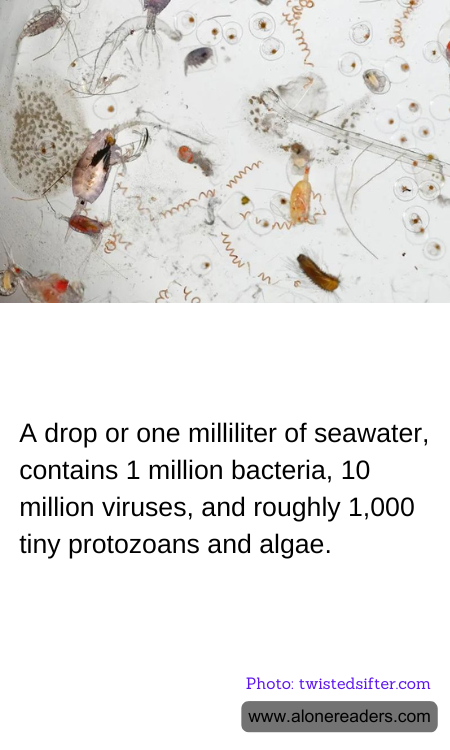
The vast and mysterious oceans cover more than 70% of our planet, yet many of us remain unaware of the bustling microscopic world that thrives within each drop of seawater. It might be surprising to learn that just one milliliter of seawater contains an astonishing number of microorganisms: approximately 1 million bacteria, 10 million viruses, and around 1,000 tiny protozoans and algae. This microscopic community plays a crucial role in maintaining the health and balance of marine ecosystems.
Bacteria in seawater are essential for nutrient cycling. They break down organic matter, releasing nutrients back into the water, which are then used by other marine organisms. These bacteria are not only vital for the ocean's health but also for the global carbon cycle. By converting carbon dioxide into organic carbon, they help regulate the Earth's climate. Despite their microscopic size, these bacteria are powerhouses of the ocean, driving processes that sustain life both in the sea and on land.
Viruses, though often associated with disease, play a surprisingly beneficial role in the ocean. They are the most abundant biological entities in seawater and are crucial in controlling bacterial populations. By infecting and breaking down bacteria, viruses release nutrients back into the environment, which can then be used by other microorganisms. This process, known as viral shunt, helps maintain the balance of marine ecosystems and supports the food web. Additionally, viruses contribute to genetic diversity by transferring genes between organisms, promoting adaptation and evolution.
The presence of protozoans and algae in seawater is equally important. Protozoans, which are single-celled organisms, act as predators of bacteria and other small particles, helping to control their populations. Algae, on the other hand, are primary producers that perform photosynthesis, converting sunlight into energy and producing oxygen as a byproduct. This oxygen is not only vital for marine life but also contributes to the oxygen we breathe. Algae form the base of the marine food web, supporting a wide range of sea creatures, from tiny zooplankton to massive whales.
Understanding the complexity and significance of these microorganisms highlights the importance of preserving our oceans. Human activities, such as pollution and climate change, pose significant threats to marine ecosystems. By recognizing the intricate balance of life within a single drop of seawater, we can better appreciate the need for conservation efforts to protect these vital resources.
In conclusion, the microscopic world within seawater is a testament to the ocean's incredible biodiversity and its essential role in sustaining life on Earth. Each drop of seawater is a microcosm of life, teeming with bacteria, viruses, protozoans, and algae, all working together to maintain the delicate balance of marine ecosystems. As stewards of the planet, it is our responsibility to ensure the health and vitality of our oceans for future generations.
