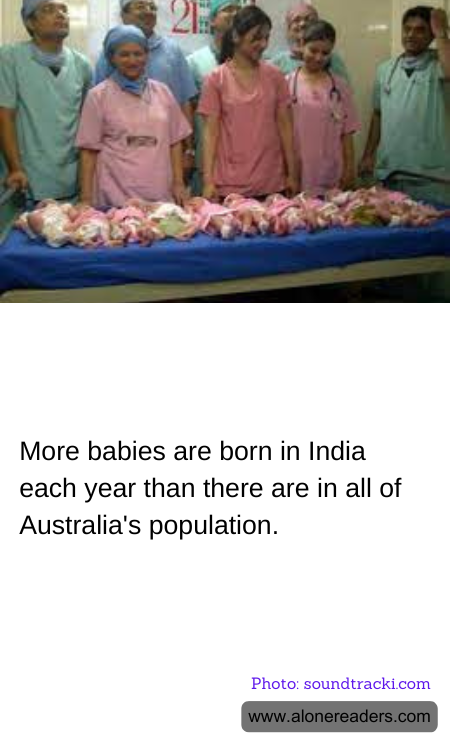
India, a nation renowned for its rich cultural heritage and diverse population, continues to make headlines with its staggering birth rates. Each year, more babies are born in India than the entire population of Australia, a fact that underscores the vast demographic differences between the two countries. This phenomenon not only highlights the sheer scale of India's population growth but also raises important questions about the implications for both nations.
India's population, which surpassed 1.4 billion in 2023, is a testament to its status as one of the most populous countries in the world. With an annual birth rate that exceeds 20 million, India sees more new lives each year than the total number of people living in Australia, which is approximately 26 million. This remarkable statistic is a reflection of India's youthful demographic, where a significant portion of the population is of childbearing age. The country's high fertility rate, although gradually declining, remains a key driver of its population growth.
In contrast, Australia, with its relatively stable population, experiences a much lower birth rate. The country's population growth is largely driven by immigration rather than natural increase. This difference in demographic trends between India and Australia is influenced by a variety of factors, including economic conditions, cultural norms, and government policies. While India grapples with the challenges of managing a rapidly growing population, Australia focuses on sustaining its population through strategic immigration policies.
The implications of India's high birth rate are multifaceted. On one hand, a large and youthful population can be a tremendous asset, providing a dynamic workforce that can drive economic growth and innovation. On the other hand, it poses significant challenges in terms of providing adequate healthcare, education, and employment opportunities for the burgeoning population. The Indian government has been actively working to address these issues through various initiatives aimed at improving healthcare access, enhancing educational infrastructure, and creating job opportunities.
For Australia, the demographic contrast with India presents both opportunities and challenges. As a nation with an aging population, Australia can benefit from the influx of young, skilled immigrants from countries like India. This can help address labor shortages and contribute to economic growth. However, it also requires careful management to ensure that the integration of new immigrants is smooth and that the country's social and cultural fabric remains cohesive.
In conclusion, the fact that more babies are born in India each year than the entire population of Australia is a striking illustration of the demographic diversity between the two nations. While India navigates the complexities of managing a large and growing population, Australia continues to leverage immigration to sustain its population growth. Both countries face unique challenges and opportunities as they adapt to their respective demographic realities, shaping their futures in an increasingly interconnected world.
