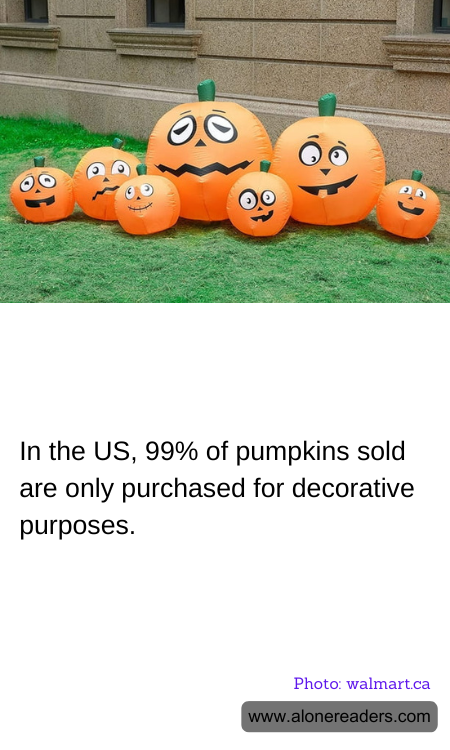
As the crisp autumn air begins to settle in and the leaves turn vibrant shades of red, orange, and yellow, pumpkins become a quintessential symbol of the season in the United States. These plump, orange gourds are synonymous with fall festivities, from Halloween to Thanksgiving. However, what might surprise many is that a staggering 99% of pumpkins sold in the U.S. are purchased primarily for decorative purposes rather than for consumption.
The tradition of using pumpkins as decorations dates back centuries, with roots in ancient Celtic festivals. The practice of carving jack-o'-lanterns, for instance, originated from an Irish myth about a man named Stingy Jack. When Irish immigrants brought this tradition to America, they found that pumpkins, native to the New World, were perfect for carving. Today, this tradition has evolved into a beloved Halloween activity, with families across the country gathering to carve intricate designs into pumpkins, illuminating them with candles to create a festive glow.
Beyond Halloween, pumpkins serve as a staple of autumnal decor. They adorn porches, windowsills, and dining tables, adding a touch of seasonal charm to homes and businesses alike. The vibrant orange hue of pumpkins complements the fall color palette, making them a popular choice for creating cozy, inviting atmospheres. From small, ornamental varieties to large, show-stopping specimens, pumpkins are versatile in their decorative appeal.
Despite their decorative dominance, pumpkins are also a nutritious and versatile food source. Rich in vitamins A and C, fiber, and antioxidants, pumpkins can be used in a variety of culinary applications, from soups and pies to breads and lattes. However, the pumpkins typically used for decoration are not the same as those best suited for eating. Decorative pumpkins, often larger and less flavorful, are different from the smaller, sweeter varieties like sugar pumpkins, which are preferred for cooking.
The focus on decorative use has led to a booming industry, with pumpkin farms and patches becoming popular destinations for families seeking the perfect pumpkin for their fall displays. These outings often include hayrides, corn mazes, and other festive activities, making pumpkin picking an integral part of the autumn experience.
While the decorative use of pumpkins is a cherished tradition, it also raises questions about sustainability and waste. After the fall season, many pumpkins end up in landfills, contributing to environmental concerns. Efforts to encourage composting and creative reuse of pumpkins are gaining traction, promoting a more sustainable approach to this beloved seasonal symbol.
In conclusion, while pumpkins in the U.S. are predominantly purchased for their decorative appeal, they hold a deeper cultural significance that transcends their ornamental use. As symbols of harvest and festivity, pumpkins continue to captivate the imagination and bring joy to people of all ages during the fall season. Whether carved into jack-o'-lanterns or displayed in a festive arrangement, pumpkins remain an enduring emblem of autumn's beauty and bounty.
