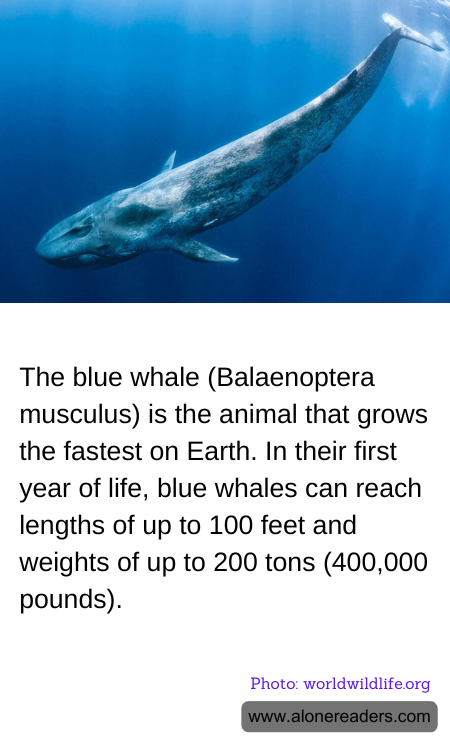
The blue whale, scientifically known as Balaenoptera musculus, holds the title of the largest animal on Earth, and its growth rate is nothing short of extraordinary. From the moment they are born, blue whales embark on an incredible journey of rapid growth, unmatched by any other creature in the animal kingdom. In their first year alone, these gentle giants can grow to astonishing lengths of up to 100 feet and can weigh as much as 200 tons, equivalent to 400,000 pounds.
This remarkable growth spurt begins at birth, when a blue whale calf enters the world already weighing around 3 tons and measuring approximately 25 feet in length. The calf's primary source of nutrition is its mother's milk, which is incredibly rich in fat content, allowing the young whale to gain up to 200 pounds each day. This rapid weight gain is crucial for the calf's survival in the vast and often harsh ocean environment, providing it with the necessary energy reserves to thrive.
The blue whale's growth is not just a testament to its biological marvel but also highlights the importance of its habitat and diet. Blue whales primarily feed on tiny shrimp-like animals called krill. During feeding season, an adult blue whale can consume up to 4 tons of krill in a single day. This immense intake of food supports their massive size and energy requirements, enabling them to sustain their rapid growth during the early stages of life.
Despite their enormous size, blue whales are known for their gentle nature. They glide gracefully through the ocean, often traveling thousands of miles across the globe. Their presence is a reminder of the ocean's vastness and the delicate balance of marine ecosystems. However, these magnificent creatures face numerous threats, including climate change, ship strikes, and entanglement in fishing gear, which have contributed to their status as an endangered species.
Conservation efforts are crucial to ensuring the survival of blue whales. Protecting their natural habitats, regulating shipping lanes, and reducing ocean pollution are essential steps in safeguarding these majestic animals for future generations. By understanding and appreciating the blue whale's unique life cycle and the challenges they face, we can foster a greater sense of responsibility towards preserving the ocean's biodiversity.
In conclusion, the blue whale's rapid growth rate is a fascinating aspect of its biology, reflecting the wonders of nature's design. As the largest animal to ever exist on our planet, the blue whale continues to captivate the imagination of people worldwide. By working together to protect these gentle giants, we can ensure that they continue to grace our oceans for generations to come, serving as a symbol of the beauty and complexity of life on Earth.
