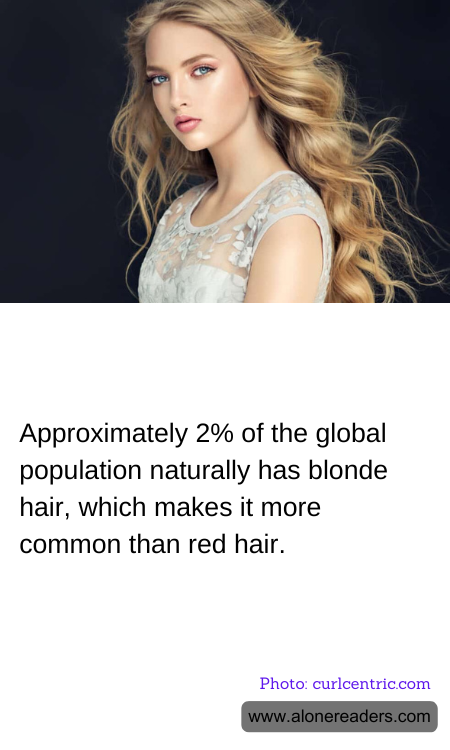
Blonde hair, often associated with images of sun-kissed beaches and Scandinavian beauty, is a rare and fascinating genetic trait. Approximately 2% of the global population naturally possesses blonde hair, making it a unique feature that captures the imagination of many. Despite its rarity, blonde hair is more common than red hair, which is found in only about 1-2% of the world's population. This intriguing fact highlights the diversity of human genetics and the cultural significance attached to hair color.
The prevalence of blonde hair is largely concentrated in Northern Europe, particularly in countries like Sweden, Norway, and Finland. This distribution is believed to be a result of evolutionary adaptations to the region's climate and environment. The lighter pigmentation of blonde hair is thought to have developed as a response to lower levels of sunlight, allowing for more efficient synthesis of vitamin D. This adaptation was crucial for survival in areas with long, dark winters and limited sunlight.
Blonde hair has long been a subject of fascination and cultural symbolism. In many Western cultures, it is often associated with beauty, youth, and vitality. This perception has been perpetuated by media and popular culture, where blonde-haired individuals are frequently portrayed as glamorous and desirable. Icons like Marilyn Monroe and Brigitte Bardot have further cemented the allure of blonde hair in the public consciousness. However, it is important to recognize that these cultural associations are not universal and can vary significantly across different societies.
The rarity of natural blonde hair has also led to a booming industry in hair dye and cosmetics, as many people seek to emulate this distinctive look. The desire to achieve blonde hair, whether through highlights, full dye jobs, or wigs, underscores the powerful influence of cultural ideals on personal aesthetics. This trend is not limited to any one demographic, as individuals of all ages and backgrounds experiment with blonde hues to express their individuality and style.
While the allure of blonde hair is undeniable, it is essential to appreciate the rich tapestry of hair colors that exist worldwide. Each shade, from deep brunettes to fiery reds, contributes to the diversity and beauty of human appearance. Celebrating this diversity helps to foster a more inclusive understanding of beauty that transcends cultural stereotypes and embraces the unique qualities of every individual.
In conclusion, the natural occurrence of blonde hair in approximately 2% of the global population highlights both the rarity and the cultural significance of this hair color. While more common than red hair, blonde hair remains a distinctive trait that continues to captivate people around the world. As we celebrate the diversity of human genetics, it is important to appreciate the beauty inherent in all hair colors and the unique stories they tell.
