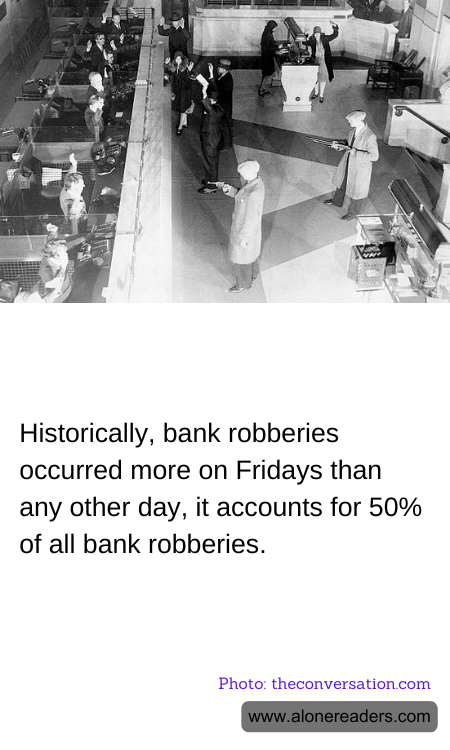
Bank robberies have long captured the imagination of the public, often depicted in movies and literature as daring escapades. However, the reality of these crimes is far more calculated and, interestingly, often tied to specific days of the week. Historically, Fridays have been the most popular day for bank robberies, accounting for a staggering 50% of all such incidents. This intriguing pattern raises questions about the motivations and strategies of those who commit these crimes.
One reason Fridays might be favored by bank robbers is the anticipation of increased cash reserves. As the end of the workweek approaches, banks typically prepare for the weekend by stocking up on cash to accommodate the payday rush. Many employees receive their paychecks on Fridays, leading to a higher volume of transactions and, consequently, more money on hand. This makes banks particularly attractive targets for robbers seeking a larger haul.
Moreover, Fridays are often bustling with activity, both inside banks and in the surrounding areas. The increased foot traffic can provide a cover for robbers, allowing them to blend in more easily with customers and escape detection. The chaos of a busy bank can also serve as a distraction, making it more challenging for staff to notice suspicious behavior or respond quickly to a robbery in progress. Additionally, the end-of-week fatigue might contribute to a lapse in vigilance among bank employees, further facilitating the robbers' plans.
Another factor contributing to the prevalence of Friday bank robberies could be the psychological mindset of the perpetrators. The end of the week might symbolize a deadline or a sense of urgency for those planning a heist. The prospect of having the weekend to lay low and evade capture could also be appealing, providing a window of opportunity to escape before law enforcement ramps up its efforts on Monday.
Despite the historical trend, advancements in security technology and law enforcement tactics have made bank robberies increasingly difficult to execute successfully. Modern banks are equipped with sophisticated surveillance systems, silent alarms, and security personnel trained to handle such situations. Additionally, the rise of digital banking has reduced the amount of physical cash available, further deterring potential robbers.
While the allure of a Friday bank robbery may persist in the minds of some criminals, the risks involved have grown significantly. Law enforcement agencies continue to analyze patterns and adapt their strategies to prevent these crimes, ensuring that banks remain safe for employees and customers alike. As society evolves and technology advances, the hope is that the days of frequent bank robberies will become a thing of the past, relegated to the annals of history and the realm of fiction.
