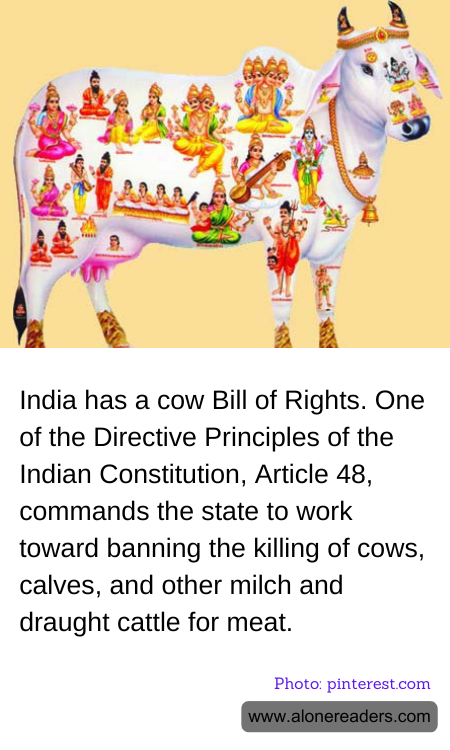
India, a nation deeply rooted in cultural and religious traditions, has long revered the cow as a symbol of life and sustenance. This veneration is not merely cultural but has also been enshrined in the country's legal framework. One of the Directive Principles of State Policy in the Indian Constitution, Article 48, explicitly directs the state to endeavor to prohibit the slaughter of cows, calves, and other milch and draught cattle. This directive reflects the profound respect for cows in Indian society and underscores the importance of these animals in the country's agrarian economy.
The inclusion of Article 48 in the Constitution is a testament to the influence of Hindu philosophy, which regards the cow as sacred. In Hinduism, the cow is associated with various deities and is considered a symbol of non-violence, motherhood, and abundance. This cultural reverence has translated into legal measures aimed at protecting cows from slaughter, thereby ensuring their welfare and longevity. The directive is not just a religious or cultural mandate but also a socio-economic one, recognizing the cow's pivotal role in agriculture and rural livelihoods.
Cows are integral to India's rural economy, providing milk, dung for fuel and fertilizer, and draught power for farming. By advocating for the protection of these animals, Article 48 aims to preserve and enhance the agricultural productivity and sustainability of rural communities. The directive encourages states to implement policies that support cattle welfare, promote alternative uses for cattle beyond meat production, and enhance the economic viability of cattle rearing.
However, the implementation of Article 48 has been a subject of debate and varying interpretations across different states in India. While some states have enacted stringent laws banning cow slaughter, others have adopted more lenient approaches, reflecting the diverse cultural and economic contexts within the country. This variation often leads to legal and political challenges, as well as discussions about balancing religious sentiments with economic realities.
Despite these challenges, the essence of Article 48 remains a guiding principle for the Indian state, emphasizing the need to protect and preserve cattle as a vital component of the nation's heritage and economy. It serves as a reminder of the country's commitment to upholding its cultural values while striving for economic development and social welfare.
In conclusion, India's cow Bill of Rights, as articulated in Article 48 of the Constitution, is a unique blend of cultural reverence and socio-economic pragmatism. It highlights the importance of cows in Indian society and underscores the state's responsibility to protect these animals. As India continues to evolve, the principles enshrined in Article 48 will likely remain a cornerstone of the nation's approach to animal welfare and agricultural sustainability.
