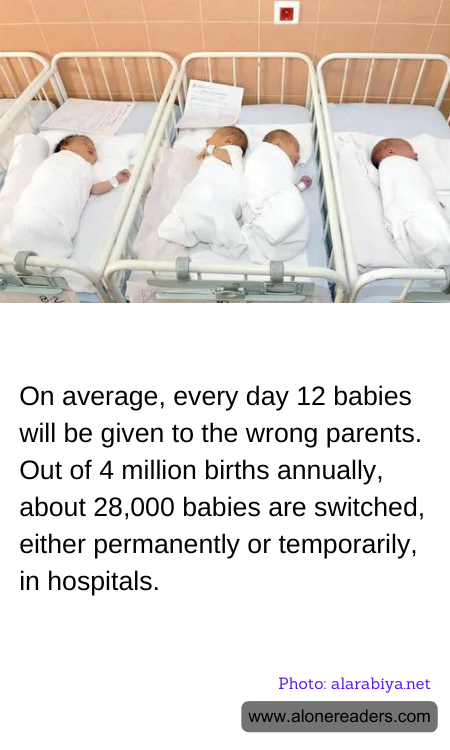
In the bustling environment of a hospital maternity ward, where the joy of new life is celebrated daily, an unsettling statistic lurks beneath the surface. On average, every day, 12 babies are given to the wrong parents, a startling revelation that underscores the importance of stringent hospital protocols and vigilant parental awareness. Out of the approximately 4 million births that occur annually in the United States, about 28,000 babies are switched, either temporarily or permanently. This phenomenon, while rare in the grand scheme of things, raises significant concerns about hospital practices and the emotional turmoil such errors can cause.
The reasons behind these mix-ups are varied, often stemming from human error in the fast-paced, high-pressure environment of a maternity ward. Nurses and hospital staff, despite their best intentions, can make mistakes in the identification process, especially during busy periods or shift changes. The consequences of such errors can range from temporary confusion to long-lasting emotional and psychological impacts on the families involved. For the parents, discovering that the baby they have bonded with is not biologically theirs can be devastating, leading to a complex mix of emotions and a challenging path to resolution.
Hospitals have implemented numerous measures to prevent such occurrences, including the use of identification bracelets, electronic tracking systems, and strict protocols for handling newborns. Despite these efforts, the potential for error remains, highlighting the need for continuous improvement in hospital procedures and technology. Parents can also play a proactive role by being vigilant and involved in the identification process, ensuring that they are present during key moments such as the initial identification and any subsequent handling of their newborn.
The issue of baby switching, whether temporary or permanent, is not just a logistical challenge but a deeply human one. It touches on the fundamental aspects of identity, family, and trust. While the numbers may seem small in comparison to the total number of births, for those affected, the impact is profound and life-altering. It is crucial for hospitals to maintain transparency and provide support to families when such incidents occur, ensuring that they are handled with sensitivity and care.
Ultimately, the goal is to eliminate these errors entirely, creating a safe and secure environment for both newborns and their families. As technology advances, there is hope that new solutions will further reduce the risk of such mix-ups, providing peace of mind to parents and ensuring that every baby is placed in the arms of their rightful family. Until then, awareness and vigilance remain key components in safeguarding the precious moments of welcoming a new life into the world.
