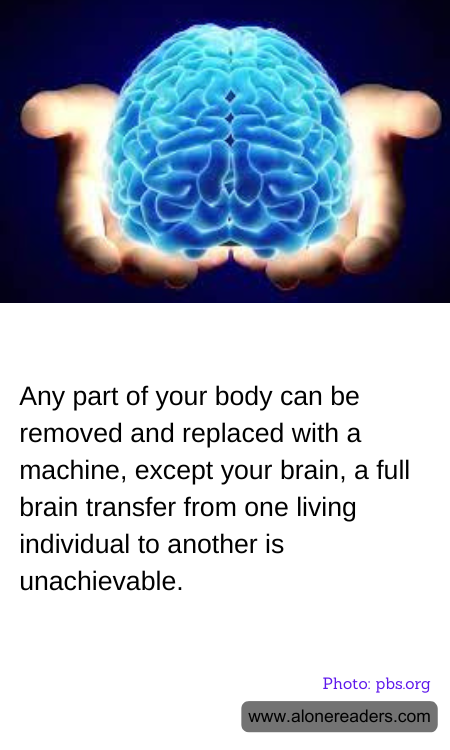
In the realm of modern medicine and technology, the human body has become a canvas for remarkable advancements. Today, it is possible to replace almost any part of the human body with a mechanical counterpart. From prosthetic limbs that respond to neural commands to artificial hearts that sustain life, the integration of machines into human physiology has reached unprecedented heights. However, amidst these groundbreaking achievements, one frontier remains elusive: the full transfer of a living brain from one individual to another.
The human brain, a complex organ of unparalleled intricacy, is the epicenter of our thoughts, emotions, and identity. It is the seat of consciousness, a labyrinth of neurons and synapses that orchestrates every aspect of our being. While science has made strides in understanding its functions, the notion of transplanting a brain remains firmly in the realm of science fiction. The brain's delicate structure and its intricate connections with the rest of the body present formidable challenges that current technology cannot overcome.
The idea of replacing body parts with machines is not new. Prosthetics have been used for centuries, but recent advancements have transformed them from simple mechanical devices into sophisticated, responsive tools. Bionic limbs, for instance, can now mimic the natural movements of human arms and legs, providing amputees with a level of functionality that was once unimaginable. Similarly, cochlear implants have restored hearing to those with profound deafness, and artificial retinas are beginning to offer hope to the visually impaired.
Despite these successes, the brain remains a singular entity. Its complexity is not just in its structure but in its function as the repository of personal identity. Each brain is unique, shaped by a lifetime of experiences and memories. The challenge of transferring this essence from one body to another is not merely technical but philosophical. It raises questions about the nature of self and consciousness that science has yet to answer.
Moreover, the brain's integration with the body is not a simple matter of connectivity. It is a dynamic relationship, with constant feedback loops that regulate everything from heartbeat to emotional responses. The brain's ability to adapt and rewire itself, known as neuroplasticity, is crucial for recovery from injury and adaptation to new environments. This adaptability, while a testament to the brain's resilience, also complicates the idea of transplantation.
In conclusion, while the replacement of body parts with machines has transformed lives and expanded the boundaries of human capability, the brain remains an uncharted territory. It is a reminder of the limits of our current technology and the profound mysteries that still lie within us. As we continue to explore the possibilities of merging man and machine, the brain stands as a testament to the complexity and wonder of human life, a frontier that challenges us to rethink what it means to be human.
