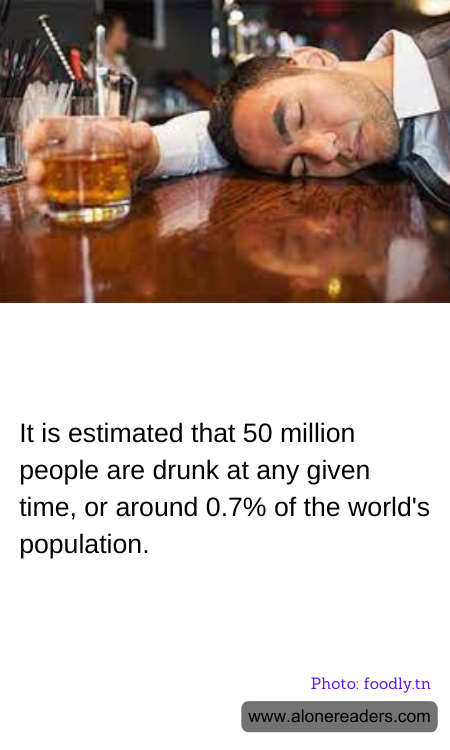
At any given moment, an estimated 50 million people around the world are under the influence of alcohol. This staggering figure represents approximately 0.7% of the global population, highlighting the widespread nature of alcohol consumption and its impact on society. While alcohol has been a part of human culture for thousands of years, its prevalence and the issues surrounding its consumption continue to be a topic of significant concern and discussion.
Alcohol consumption is deeply embedded in many cultures, often associated with social gatherings, celebrations, and rituals. For some, it serves as a means of relaxation or a way to unwind after a long day. However, the line between moderate consumption and excessive drinking can be thin, and crossing it can lead to a host of problems. The effects of alcohol are not limited to the individual; they ripple through families, communities, and economies. Drunk driving, alcohol-related health issues, and addiction are just a few of the challenges that arise from excessive alcohol consumption.
The reasons why people drink vary widely. For some, it is a social activity, while others may turn to alcohol as a coping mechanism for stress, anxiety, or depression. The accessibility and social acceptance of alcohol can make it an easy choice for those seeking temporary relief from life's pressures. However, this can lead to a cycle of dependency, where individuals find themselves unable to function without the presence of alcohol in their lives.
Efforts to address the issue of excessive drinking are multifaceted. Public health campaigns aim to raise awareness about the dangers of alcohol abuse and promote responsible drinking habits. Governments around the world have implemented policies such as age restrictions, taxation, and advertising regulations to curb excessive consumption. Additionally, support systems, including counseling and rehabilitation programs, are available to help those struggling with alcohol dependency.
Despite these efforts, the challenge remains significant. The social and cultural factors that contribute to alcohol consumption are deeply rooted and complex. Addressing the issue requires a comprehensive approach that involves education, policy changes, and community support. It is crucial to foster environments where individuals feel empowered to make informed choices about their alcohol consumption and have access to the resources they need to seek help if necessary.
Ultimately, the statistic that 50 million people are drunk at any given time serves as a reminder of the pervasive nature of alcohol in our world. It calls for a collective effort to understand and address the underlying causes of excessive drinking while promoting healthier, more sustainable lifestyles. By doing so, we can work towards reducing the negative impact of alcohol on individuals and society as a whole, creating a safer and healthier world for everyone.
