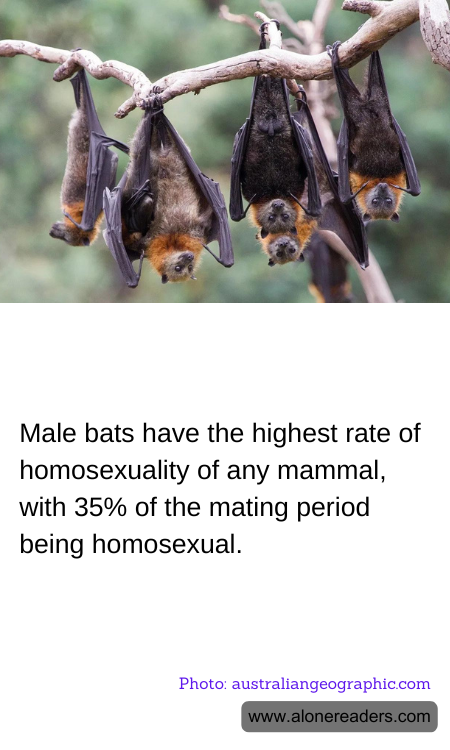
In the fascinating world of bats, a surprising aspect of their social behavior has captured the attention of scientists and nature enthusiasts alike. Male bats exhibit the highest rate of homosexual behavior among mammals, with studies indicating that approximately 35% of their mating interactions are homosexual. This intriguing phenomenon challenges traditional perceptions of animal behavior and offers a unique perspective on the complexity of wildlife social structures.
Bats, often misunderstood and shrouded in mystery, are incredibly diverse creatures with over 1,400 species worldwide. They play crucial roles in ecosystems, from pollination to pest control. However, their social behaviors, particularly in terms of mating, remain less explored compared to other mammals. The high incidence of homosexual behavior among male bats is not only a testament to their complex social interactions but also a reminder of the diversity of natural behaviors in the animal kingdom.
The reasons behind this prevalent homosexual behavior in male bats are not entirely understood, but several hypotheses have been proposed. One possibility is that these interactions help strengthen social bonds within colonies. Bats are highly social animals, often living in large groups, and maintaining strong social ties can be crucial for survival. Homosexual interactions may serve as a means of reinforcing alliances and cooperation among males, which can be beneficial in terms of protection and resource sharing.
Another theory suggests that homosexual behavior in bats could be a byproduct of their high-energy lifestyle. Bats expend significant energy during flight and foraging, and engaging in homosexual interactions might be a way to practice and refine mating skills without the immediate pressures of reproduction. This behavior could also serve as a mechanism for reducing tension and conflict within colonies, promoting harmony and stability.
Furthermore, the study of homosexual behavior in bats contributes to a broader understanding of sexual diversity in the animal kingdom. It challenges the notion that heterosexual reproduction is the sole driver of animal behavior and highlights the importance of considering a wide range of social and environmental factors. By examining these behaviors in bats, researchers can gain insights into the evolutionary advantages of such interactions and how they may have developed over time.
The high rate of homosexual behavior in male bats underscores the complexity and diversity of animal life. It invites us to reconsider preconceived notions about sexuality in the natural world and appreciate the myriad ways in which animals interact and thrive. As research continues to uncover the intricacies of bat behavior, it becomes increasingly clear that these remarkable creatures have much to teach us about the richness of life on Earth. Understanding and respecting this diversity is essential for fostering a deeper appreciation of the natural world and the myriad forms of life it sustains.
