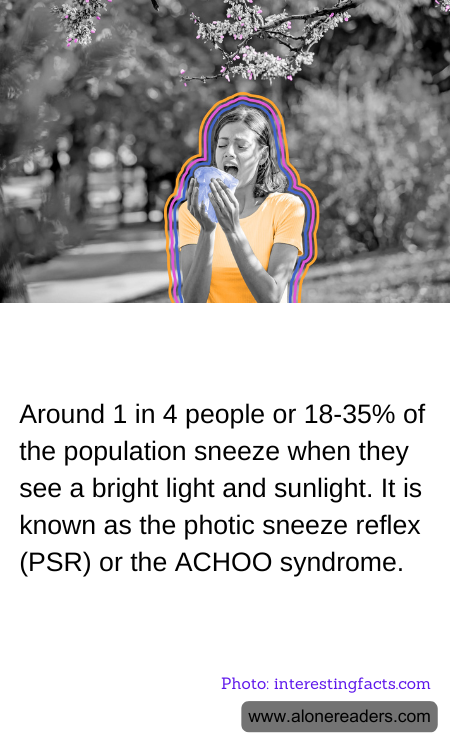
The phenomenon of sneezing when exposed to bright light or sunlight, known as the photic sneeze reflex (PSR) or ACHOO syndrome, is a curious quirk of human biology that affects approximately 18-35% of the population. This reflex is not only intriguing but also a testament to the diverse ways in which our bodies respond to external stimuli.
The photic sneeze reflex is a genetic trait, meaning it can be inherited from one's parents. Despite its prevalence, the exact cause of PSR remains somewhat of a mystery to scientists. The reflex is thought to occur due to a cross-wiring in the brain between the optic nerve, which processes light, and the trigeminal nerve, which is involved in sneezing. When a person with this reflex encounters a sudden burst of bright light, such as stepping out into the sunlight, the overstimulation of the optic nerve may inadvertently trigger the trigeminal nerve, resulting in a sneeze.
Interestingly, the intensity and frequency of sneezing can vary among individuals with PSR. Some may experience a single sneeze, while others might have a series of sneezes. This variability adds another layer of complexity to understanding the reflex. Despite its benign nature, the photic sneeze reflex can be inconvenient, especially for those who are unaware of their sensitivity to light. For instance, it can pose a temporary distraction while driving or engaging in outdoor activities.
While the photic sneeze reflex is generally harmless, it has sparked curiosity and research within the scientific community. Studies have explored the genetic basis of the reflex, identifying it as an autosomal dominant trait. This means that if one parent has the reflex, there is a 50% chance that their child will inherit it. However, the specific genes involved have yet to be pinpointed, leaving room for further exploration.
For those who experience the photic sneeze reflex, there are a few practical tips to manage it. Wearing sunglasses can help reduce the intensity of light entering the eyes, potentially minimizing the reflex. Additionally, gradually exposing oneself to bright light, rather than encountering it suddenly, may help mitigate the sneezing response.
In conclusion, the photic sneeze reflex is a fascinating example of the intricate connections within the human nervous system. While it may be a minor inconvenience for some, it serves as a reminder of the unique and often unpredictable ways our bodies interact with the world around us. As research continues, we may one day fully understand the genetic and neurological underpinnings of this quirky reflex, shedding light on yet another aspect of human diversity.
