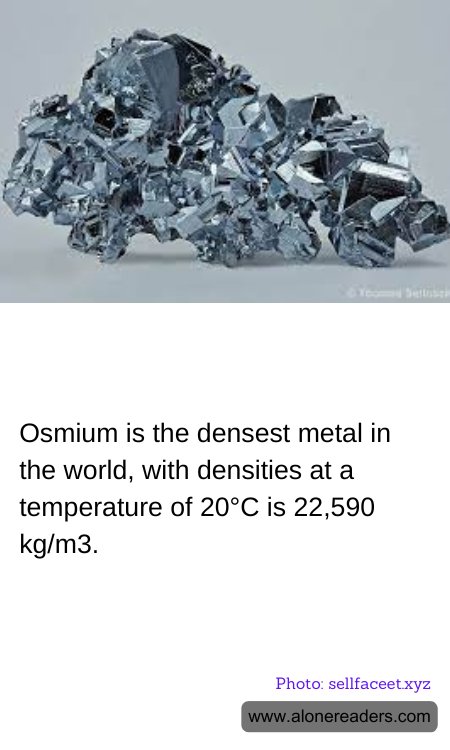
Osmium, a member of the platinum group metals, holds the distinction of being the densest naturally occurring element on Earth. With a remarkable density of 22,590 kilograms per cubic meter at a temperature of 20°C, osmium surpasses all other metals in terms of compactness. This extraordinary density is a result of its tightly packed atomic structure, which contributes to its unique properties and diverse applications.
Discovered in 1803 by English chemist Smithson Tennant, osmium is a bluish-white metal that is both hard and brittle. Its name is derived from the Greek word "osme," meaning smell, due to the distinct odor of its volatile oxide. Despite its impressive density, osmium is relatively rare in the Earth's crust, making it a precious and sought-after material. It is typically found in nature alloyed with other platinum group metals and is primarily extracted during the refining of nickel and copper ores.
The exceptional density of osmium lends itself to a variety of specialized applications. In the world of science and industry, osmium is often used in alloys to enhance hardness and durability. For instance, osmium alloys are employed in the manufacture of fountain pen nibs, electrical contacts, and phonograph needles, where wear resistance is crucial. Additionally, its high density makes it an ideal candidate for use in scientific equipment, such as high-precision balances and weights.
Beyond its industrial uses, osmium's density and rarity have also captured the interest of collectors and investors. In recent years, osmium has emerged as a novel investment opportunity, with some viewing it as a tangible asset akin to gold or silver. Its scarcity and unique properties make it an intriguing addition to any collection, although its handling requires care due to the potential toxicity of its oxides.
Despite its many advantages, the use of osmium is not without challenges. The metal's brittleness can make it difficult to work with, and its high melting point of 3,033°C poses challenges in processing and fabrication. Moreover, the potential health risks associated with osmium tetroxide, a toxic compound formed when the metal is exposed to air, necessitate careful handling and storage.
In conclusion, osmium's status as the densest metal in the world underscores its significance in both scientific and industrial contexts. Its unique properties, coupled with its rarity, make it a fascinating subject of study and a valuable material for various applications. Whether used in high-precision instruments or as a collectible asset, osmium continues to captivate those who encounter it, embodying the remarkable complexity and diversity of the elements that make up our world.
