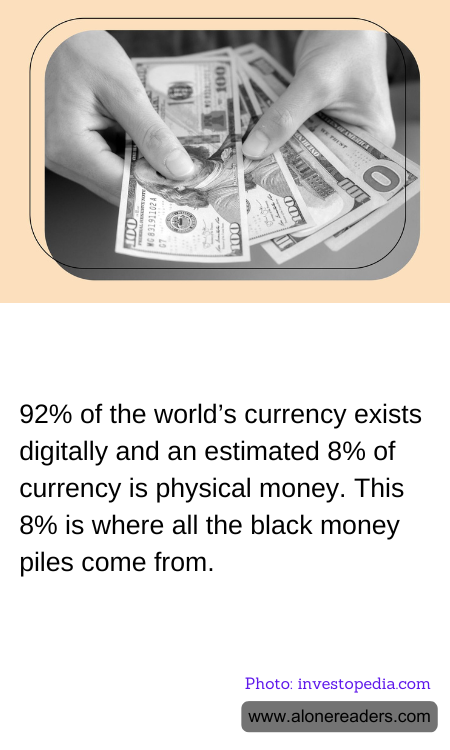
In today's rapidly evolving financial landscape, the concept of money has undergone a significant transformation. With the advent of digital technology, a staggering 92% of the world's currency now exists in digital form. This shift towards digital currency has not only revolutionized the way we conduct transactions but has also raised important questions about the remaining 8% of currency that exists as physical money.
The digitalization of currency offers numerous advantages, including convenience, speed, and security. Digital transactions can be completed in seconds, eliminating the need for physical exchange and reducing the risk of theft or loss. Moreover, digital currency facilitates global commerce, allowing for seamless transactions across borders without the need for currency conversion. This has made it easier for businesses and individuals to engage in international trade and investment.
However, the existence of physical money, which constitutes only 8% of the total currency, presents unique challenges. This small percentage is often associated with the shadowy world of black money. Black money refers to funds that are earned through any illegal activity controlled by country regulations and not declared for tax purposes. The anonymity and untraceability of cash transactions make physical money an attractive option for those seeking to evade taxes or engage in illicit activities.
The concentration of black money in physical form poses significant challenges for governments and financial institutions. Efforts to combat money laundering and tax evasion are often hampered by the difficulty of tracking cash transactions. While digital transactions leave a trail that can be monitored and audited, cash transactions can easily slip under the radar, making it difficult to enforce financial regulations and ensure compliance.
To address these challenges, many countries are taking steps to reduce the reliance on physical currency. Initiatives such as promoting digital payments, implementing cash transaction limits, and enhancing financial literacy are being pursued to encourage the transition to a more transparent and accountable financial system. These measures aim to curb the flow of black money and ensure that financial resources are used for legitimate purposes.
As the world moves towards a more digital economy, the role of physical money is likely to diminish further. The benefits of digital currency, combined with the need to combat financial crime, make a compelling case for reducing the reliance on cash. However, it is important to ensure that this transition is inclusive and accessible to all segments of society, including those who may not have easy access to digital technology.
In conclusion, while the digitalization of currency offers numerous benefits, the existence of physical money continues to pose challenges in the fight against black money. By promoting digital transactions and implementing effective regulatory measures, we can work towards a financial system that is both efficient and equitable, ensuring that the benefits of digital currency are realized by all.
