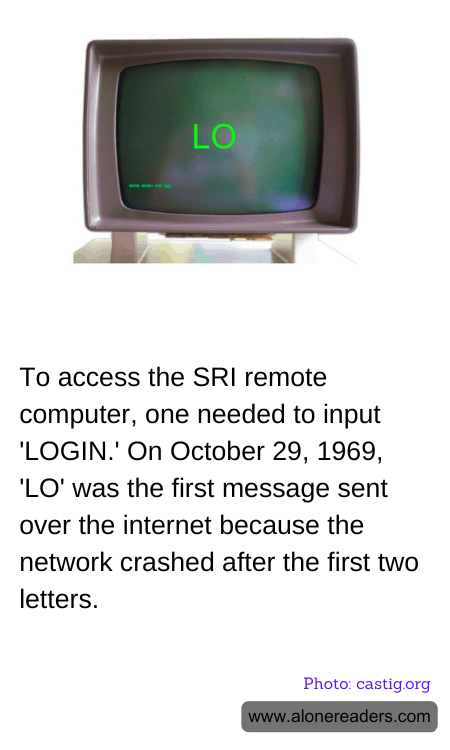
In the annals of technological history, certain moments stand out as pivotal turning points that have shaped the modern world. One such moment occurred on October 29, 1969, when the first message was sent over what would eventually become the internet. This groundbreaking event took place between two computers located at the University of California, Los Angeles (UCLA) and the Stanford Research Institute (SRI). The intended message was simple: "LOGIN." However, the network crashed after just two letters, resulting in the transmission of "LO."
This seemingly insignificant message marked the beginning of a new era in communication. At the time, the concept of connecting computers over a network was revolutionary. The project, funded by the Advanced Research Projects Agency (ARPA), aimed to create a robust and decentralized communication system that could withstand potential disruptions, such as those caused by natural disasters or military attacks. This network, known as ARPANET, laid the groundwork for the internet as we know it today.
The first message, "LO," may have been incomplete, but it symbolized the dawn of a digital revolution. The engineers and computer scientists involved in the project, including Leonard Kleinrock, who was instrumental in developing packet-switching theory, understood the potential of their work. Despite the initial technical hiccup, they persevered, and within a short time, the network was successfully transmitting complete messages. By December of the same year, ARPANET had expanded to include four nodes, connecting UCLA, SRI, the University of California, Santa Barbara, and the University of Utah.
The significance of this early experiment cannot be overstated. It demonstrated the feasibility of computer networking and set the stage for the development of the global internet. Over the following decades, the network grew exponentially, evolving from a tool for academic and military use into a ubiquitous part of everyday life. Today, the internet connects billions of devices worldwide, enabling instant communication, information sharing, and access to a wealth of knowledge.
Reflecting on the first message sent over the internet, it's fascinating to consider how far technology has come since that fateful day in 1969. The simple transmission of "LO" was a small step for technology but a giant leap for humanity. It opened the door to innovations that have transformed industries, economies, and societies. As we continue to advance in the digital age, it's important to remember the humble beginnings of the internet and the visionaries who dared to dream of a connected world.
In conclusion, the story of the first internet message is a testament to human ingenuity and perseverance. It serves as a reminder that even the most significant technological advancements often begin with small, imperfect steps. As we look to the future, we can draw inspiration from the pioneers of the internet and continue to push the boundaries of what is possible in the digital realm.
