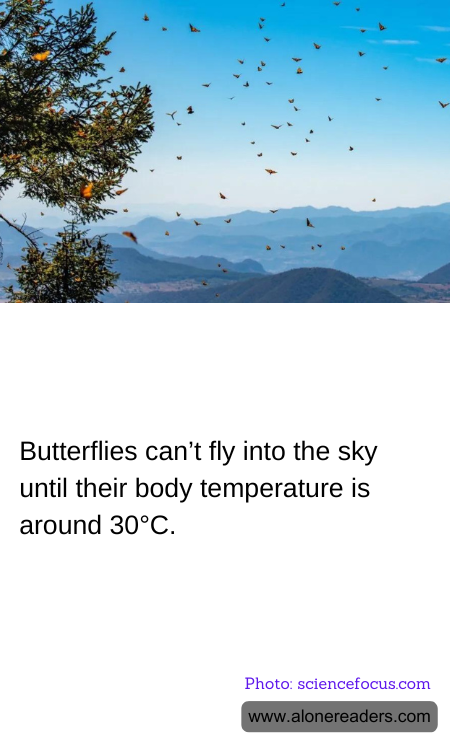
Butterflies are among nature's most captivating creatures, known for their vibrant colors and delicate wings. However, their ability to take flight is intricately linked to their body temperature, a fascinating aspect of their biology that often goes unnoticed. Unlike warm-blooded animals, butterflies are ectothermic, meaning they rely on external sources of heat to regulate their body temperature. This dependency on environmental warmth is crucial for their survival and ability to fly.
For a butterfly to soar into the sky, its body temperature must reach approximately 30°C (86°F). This temperature threshold is essential because it allows the muscles in their wings to function optimally. When a butterfly's body temperature is too low, its muscles become sluggish, making flight impossible. This is why you might observe butterflies basking in the sun with their wings spread wide. By doing so, they are effectively absorbing solar energy to warm up their bodies, preparing themselves for the day’s activities.
The process of warming up is not just about flight; it also plays a vital role in a butterfly's overall survival. A butterfly that cannot fly is vulnerable to predators and unable to forage for food or find mates. Therefore, achieving the right body temperature is a daily necessity. In cooler climates or during early mornings, butterflies may need to spend considerable time sunning themselves before they can become active. This behavior highlights the delicate balance these creatures maintain with their environment.
Interestingly, the need for warmth also influences the habitats butterflies choose. They are often found in sunny, open areas where they can easily access the sun's rays. Some species have even adapted to cooler environments by developing darker wing colors, which absorb heat more efficiently. This adaptation underscores the incredible diversity and resilience of butterflies, allowing them to thrive in various climates.
The relationship between butterflies and temperature is a reminder of the intricate connections within ecosystems. It highlights how even the smallest creatures are finely tuned to their surroundings, relying on specific conditions to carry out their life processes. For those who enjoy observing butterflies, understanding this aspect of their biology can enhance the experience, offering insight into their daily routines and the challenges they face.
In conclusion, the ability of butterflies to fly is a remarkable example of nature's ingenuity. Their reliance on external warmth to reach a body temperature of around 30°C is a testament to the complex interplay between organisms and their environment. By appreciating these nuances, we can gain a deeper respect for these beautiful insects and the delicate ecosystems they inhabit. Whether you're a seasoned lepidopterist or a casual observer, the next time you see a butterfly basking in the sun, you'll know it's not just a pretty sight—it's a vital part of its journey to the sky.
