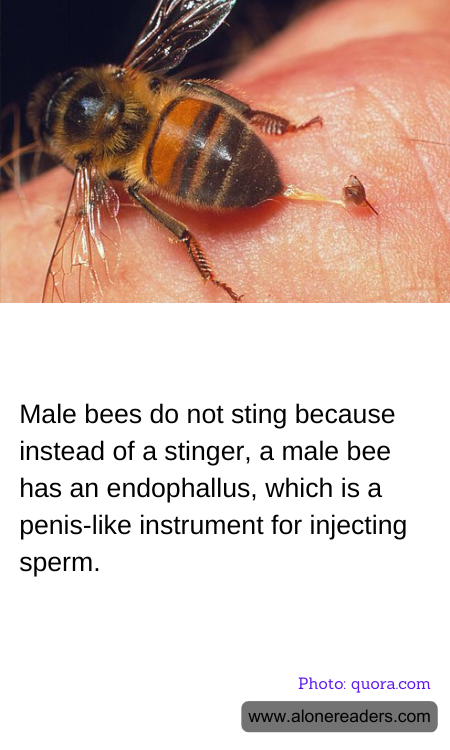
In the intricate world of bees, where each member of the colony plays a vital role, there exists a fascinating distinction between male and female bees that often goes unnoticed. While many people are aware that bees can sting, not everyone knows that only female bees possess this ability. Male bees, known as drones, are equipped with a completely different anatomical feature that sets them apart from their female counterparts.
The primary reason male bees do not sting lies in their anatomy. Unlike female bees, which have a stinger that is a modified ovipositor used for laying eggs, male bees have an endophallus. This organ is essentially a reproductive tool, akin to a penis, designed for the purpose of mating. The endophallus is used to transfer sperm to the queen bee during the mating process, ensuring the continuation of the hive's lineage. This unique adaptation highlights the specialized roles within the bee community, where each bee is equipped with the tools necessary for its specific function.
The life of a male bee is largely centered around reproduction. Drones are born from unfertilized eggs and are raised with the sole purpose of mating with a queen. They do not participate in the foraging, hive maintenance, or defense activities that worker bees, which are female, undertake. Instead, drones spend their days in the hive or flying out to congregate in drone congregation areas, where they wait for the opportunity to mate with a queen. This singular focus on reproduction means that the evolutionary pressure to develop a stinger simply does not exist for male bees.
The absence of a stinger in male bees is a fascinating example of how evolution tailors organisms to their ecological niches. In the case of bees, the division of labor is so specialized that each bee's anatomy is perfectly suited to its role within the colony. For worker bees, the ability to sting is crucial for defending the hive against threats. For drones, the ability to mate is paramount, and their anatomy reflects this priority.
Understanding the roles and characteristics of male bees not only sheds light on the complexity of bee societies but also underscores the importance of each bee's contribution to the survival and success of the colony. While male bees may not have the defensive capabilities of their female counterparts, their role in reproduction is indispensable. This intricate balance of roles and responsibilities ensures the thriving of bee populations, which are essential for pollination and the health of ecosystems worldwide.
In conclusion, the absence of a stinger in male bees is a testament to the specialized nature of their role within the hive. Equipped with an endophallus for reproduction, male bees exemplify the diverse adaptations that have evolved in response to the demands of their environment. This fascinating aspect of bee biology highlights the complexity and efficiency of nature's designs, where every creature has its place and purpose.
