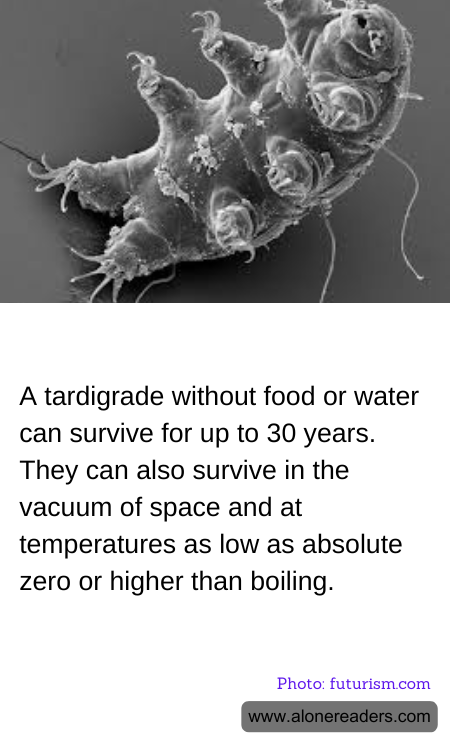
Tardigrades, often affectionately referred to as "water bears," are microscopic creatures that have captured the fascination of scientists and the public alike due to their extraordinary resilience. These tiny organisms, typically measuring less than a millimeter in length, possess survival capabilities that defy the limits of what is considered possible for life on Earth. One of the most astonishing feats of tardigrades is their ability to endure extreme conditions that would be fatal to most other forms of life.
One of the most remarkable aspects of tardigrades is their ability to survive without food or water for extended periods. In a state known as cryptobiosis, tardigrades can effectively shut down their metabolism, allowing them to endure desiccation and starvation for up to 30 years. During this state, they retract their legs and lose almost all of their water content, entering a tun-like form that is incredibly resistant to environmental stressors. This ability to pause their biological processes is a key factor in their survival across various harsh conditions.
Tardigrades are not only resilient to dehydration and starvation but also to extreme temperatures. They can withstand temperatures as low as absolute zero, the point at which molecular motion ceases, and as high as 150 degrees Celsius, which is well above the boiling point of water. This incredible thermal tolerance is due to their unique cellular structures and the production of protective proteins that prevent damage to their cells.
Perhaps even more astonishing is the tardigrades' ability to survive in the vacuum of space. In 2007, tardigrades were sent into space on the European Space Agency's FOTON-M3 mission. Exposed to the vacuum of space and harmful cosmic radiation, these resilient creatures not only survived but also managed to reproduce upon their return to Earth. This experiment demonstrated that tardigrades could endure conditions that are far beyond the extremes found on our planet.
The secret to the tardigrades' resilience lies in their unique biological makeup. They produce a sugar called trehalose, which helps protect their cells from damage during desiccation. Additionally, tardigrades have a protein called Dsup (damage suppressor) that shields their DNA from radiation. These adaptations allow them to repair and protect their cellular structures, ensuring their survival in environments that would otherwise be lethal.
Tardigrades continue to intrigue scientists as they explore the potential applications of these creatures' unique abilities. Understanding how tardigrades survive such extreme conditions could have implications for fields ranging from medicine to space exploration. As researchers delve deeper into the mysteries of these remarkable organisms, tardigrades serve as a reminder of the incredible diversity and adaptability of life on Earth. Their resilience not only challenges our understanding of life's boundaries but also inspires us to explore the possibilities of life beyond our planet.
