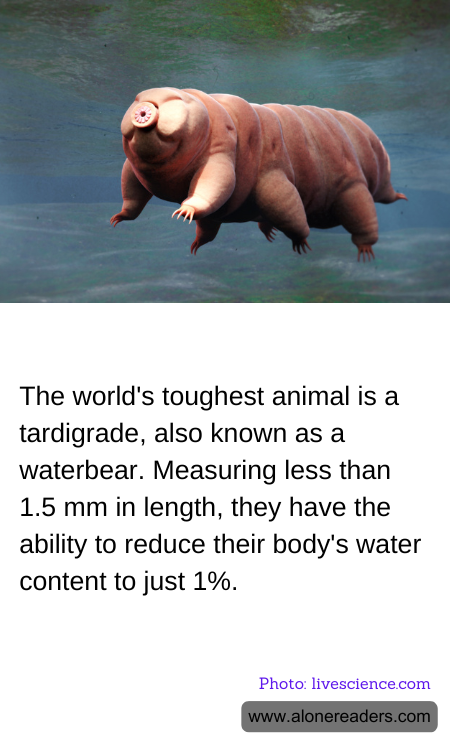
In the vast tapestry of life on Earth, few creatures capture the imagination quite like the tardigrade, affectionately known as the waterbear. These microscopic marvels, measuring less than 1.5 millimeters in length, are renowned for their extraordinary resilience, earning them the title of the world's toughest animal. Despite their diminutive size, tardigrades possess a remarkable ability to withstand extreme conditions that would be fatal to most other forms of life.
One of the most fascinating aspects of tardigrades is their ability to enter a state known as cryptobiosis. In this state, they can reduce their body's water content to just 1%, effectively suspending their metabolism and entering a form of stasis. This adaptation allows them to survive in environments that range from the freezing cold of the Antarctic to the scorching heat of deserts. Tardigrades have even been known to endure the vacuum of space, surviving the harsh radiation and extreme temperatures encountered beyond our planet's protective atmosphere.
The secret to the tardigrade's resilience lies in their unique cellular structure and the production of special proteins that protect their cells from damage. When faced with desiccation, these proteins form a glass-like matrix that stabilizes their cellular components, preventing damage and allowing them to rehydrate and resume normal function when conditions improve. This remarkable survival strategy has piqued the interest of scientists, who are keen to understand the mechanisms behind it and explore potential applications in fields such as medicine and biotechnology.
Tardigrades are not only fascinating for their resilience but also for their widespread presence across the globe. They inhabit a diverse range of environments, from the depths of the ocean to the highest mountain peaks. Despite their microscopic size, they play a crucial role in ecosystems, contributing to the decomposition of organic matter and serving as a food source for other small organisms.
For those intrigued by the wonders of the natural world, tardigrades offer a glimpse into the incredible adaptability of life. Their ability to survive in conditions that would obliterate most other organisms challenges our understanding of life's limits and inspires curiosity about the potential for life beyond Earth. As researchers continue to study these resilient creatures, the tardigrade remains a symbol of nature's ingenuity and the boundless possibilities of life.
