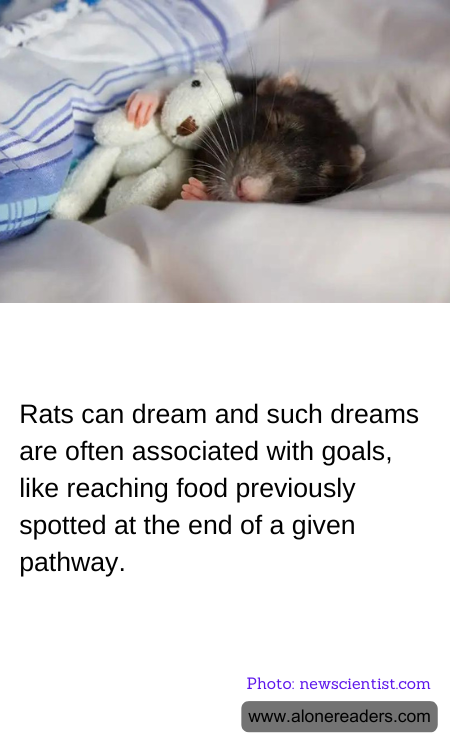
In the fascinating world of animal behavior, rats have long been subjects of scientific study due to their cognitive abilities and social structures. Recent research has unveiled a captivating aspect of their mental lives: rats can dream, and these dreams often revolve around goals, such as reaching food they have previously seen at the end of a pathway. This discovery not only enriches our understanding of these small mammals but also provides insights into the fundamental nature of dreaming across species.
Dreaming in rats is closely tied to their experiences and aspirations, much like in humans. Studies have shown that when rats navigate a maze or explore a new environment, their brains form mental maps of these spaces. These maps are stored in the hippocampus, a region of the brain associated with memory and navigation. During sleep, particularly in the rapid eye movement (REM) phase, rats replay these experiences in their minds. This replay is akin to dreaming, where they mentally traverse the paths they have explored, often focusing on reaching a specific goal, such as a food source.
The implications of these findings are profound. They suggest that dreaming is not solely a human experience but a shared trait among various animals, possibly serving similar functions. For rats, dreaming about reaching food could be a way to reinforce learning and problem-solving skills. By mentally rehearsing the paths they need to take, rats may enhance their ability to navigate these routes when they are awake, thereby increasing their chances of survival. This process of mental rehearsal during sleep could be a crucial aspect of how animals, including humans, consolidate memories and refine their strategies for achieving goals.
Moreover, the study of dreaming in rats opens up new avenues for understanding the evolutionary purpose of dreams. It raises questions about the extent to which other animals experience dreams and how these dreams might influence their behavior. If dreaming serves to reinforce learning and goal achievement in rats, it might play a similar role in other species, suggesting a universal mechanism that aids in survival and adaptation.
For the general public, these findings offer a glimpse into the complex inner lives of animals that are often underestimated. Recognizing that rats, creatures commonly associated with urban environments and laboratory settings, have the capacity to dream about their goals challenges us to reconsider our perceptions of animal intelligence and consciousness. It invites us to appreciate the intricate cognitive processes that occur in the minds of even the smallest creatures.
In conclusion, the discovery that rats can dream about reaching food highlights the remarkable cognitive abilities of these animals and underscores the potential universality of dreaming as a tool for learning and goal achievement. As research continues to explore the depths of animal cognition, we may find that the dreams of rats and other creatures are not so different from our own, reflecting a shared journey through the landscapes of memory and aspiration.
