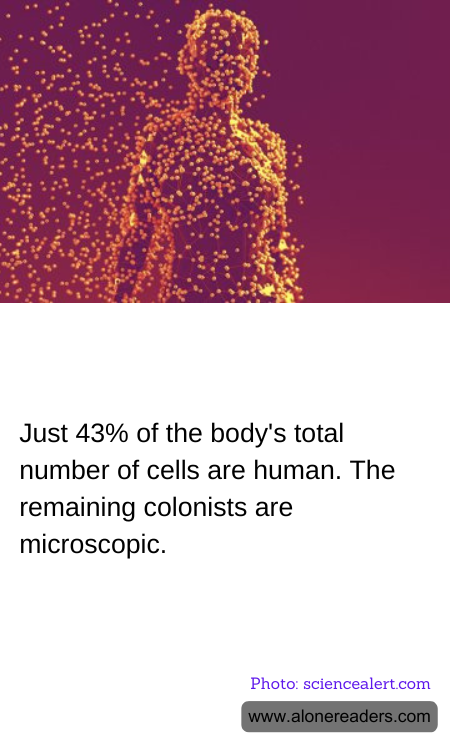
In the intricate tapestry of the human body, a surprising revelation has emerged: only 43% of the cells that make up our bodies are actually human. The remaining 57% are microscopic colonists, a diverse community of bacteria, viruses, fungi, and other microorganisms that coexist with us in a symbiotic relationship. This fascinating discovery challenges our traditional understanding of what it means to be human and highlights the complexity of our biological makeup.
These microbial inhabitants, collectively known as the human microbiome, play an essential role in maintaining our health and well-being. They are primarily located in areas such as the gut, skin, mouth, and other mucosal surfaces, where they perform a variety of functions. In the gut, for instance, these microorganisms aid in digestion, help synthesize essential vitamins, and bolster the immune system by outcompeting harmful pathogens. On the skin, they act as a protective barrier against environmental threats and contribute to the regulation of inflammation.
The relationship between humans and their microbial partners is a delicate balance. While these microorganisms are crucial for our health, disruptions in their populations can lead to various health issues. Factors such as diet, antibiotics, and lifestyle choices can significantly impact the composition of the microbiome, sometimes resulting in conditions like obesity, allergies, and autoimmune diseases. Understanding the dynamics of this relationship is a growing field of research, with scientists exploring ways to manipulate the microbiome to prevent or treat diseases.
The realization that we are more microbial than human also prompts a philosophical reflection on our identity. It challenges the notion of individuality, suggesting that we are, in fact, ecosystems composed of numerous species working in concert. This perspective encourages a broader view of health, one that considers not just the human cells but the entire community of organisms that inhabit our bodies.
As research into the human microbiome continues to advance, it holds the promise of revolutionizing medicine. Personalized treatments that target specific microbial imbalances could become a reality, offering new avenues for managing chronic diseases and improving overall health. Moreover, this knowledge underscores the importance of nurturing our microbial companions through healthy lifestyle choices, such as a balanced diet rich in fiber and fermented foods, which support a diverse and robust microbiome.
In conclusion, the discovery that only 43% of our body's cells are human invites us to rethink our understanding of ourselves. It highlights the intricate and interdependent nature of life, where humans and microorganisms coexist in a mutually beneficial relationship. As we continue to unravel the mysteries of the microbiome, we gain not only insights into our biology but also a deeper appreciation for the complexity and wonder of the living world.
