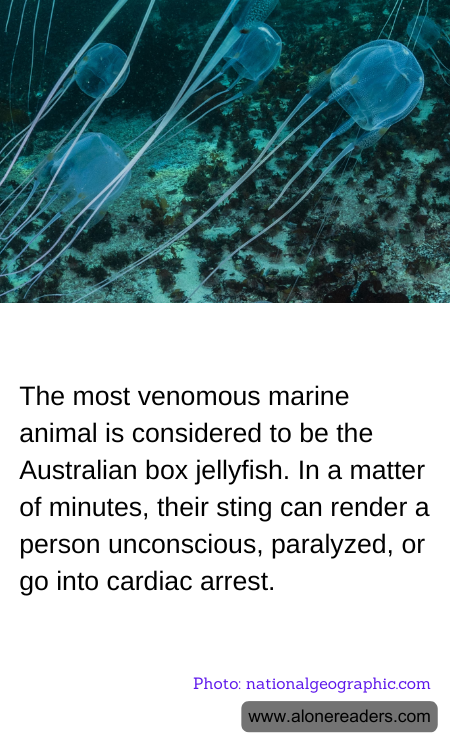
The Australian box jellyfish, scientifically known as Chironex fleckeri, is often regarded as the most venomous marine animal in the world. Found primarily in the coastal waters of Northern Australia and throughout the Indo-Pacific region, this translucent creature is both fascinating and fearsome. Its nearly invisible body, which can grow up to 30 centimeters in diameter, is equipped with up to 15 tentacles extending from each corner, each capable of reaching lengths of up to three meters. These tentacles are lined with thousands of specialized cells called cnidocytes, which contain nematocysts—tiny harpoon-like structures loaded with potent venom.
The venom of the box jellyfish is a complex cocktail of toxins that can cause extreme pain, paralysis, and even death in humans. When a person comes into contact with the tentacles, the nematocysts fire, injecting venom into the skin. This venom can attack the heart, nervous system, and skin cells, leading to symptoms that range from mild irritation to severe pain, and in some cases, cardiac arrest. The speed at which the venom acts is particularly alarming; a sting can render a person unconscious in just a few minutes, and without prompt medical treatment, it can be fatal.
Despite its deadly reputation, the box jellyfish plays a crucial role in the marine ecosystem. It is a predator that helps control the population of small fish and zooplankton, maintaining a balance in the oceanic food chain. However, its presence in popular swimming areas poses a significant risk to humans. To mitigate this danger, many Australian beaches have implemented safety measures such as stinger nets and vinegar stations. Vinegar can help neutralize the venom if applied immediately after a sting, although it is not a substitute for professional medical treatment.
Education and awareness are key to preventing box jellyfish stings. Swimmers are advised to heed warning signs, wear protective clothing, and avoid swimming in areas known to be inhabited by these jellyfish, especially during the warmer months when they are most active. Lifeguards and beach patrols are trained to respond quickly to jellyfish stings, providing first aid and ensuring that victims receive the necessary medical attention.
In conclusion, while the Australian box jellyfish is a marvel of nature, its venomous sting is a reminder of the ocean's potential dangers. By respecting these creatures and taking appropriate precautions, humans can safely enjoy the beauty of the marine environment. Understanding and respecting the power of the box jellyfish is essential for ensuring that both humans and marine life can coexist peacefully in the waters they share.
