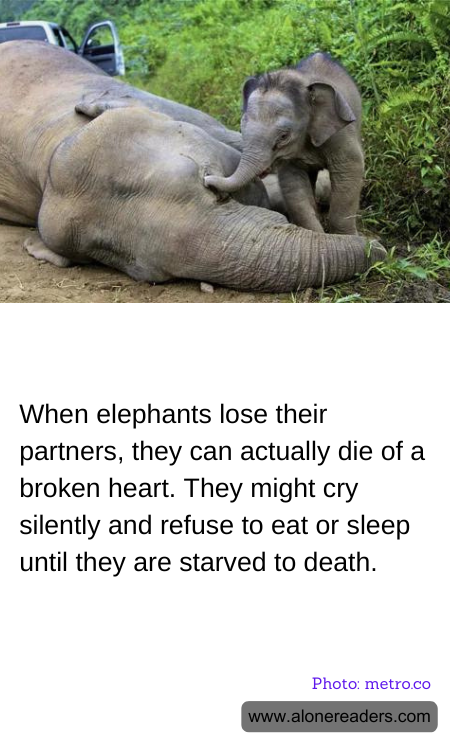
Elephants, the gentle giants of the animal kingdom, are renowned for their intelligence, complex social structures, and deep emotional bonds. These majestic creatures form lifelong partnerships and familial ties that are integral to their well-being. When an elephant loses a partner, the impact can be profound, sometimes leading to a phenomenon akin to dying of a broken heart.
Elephants are highly social animals, living in matriarchal herds where relationships are nurtured over decades. The bonds they form are not just with family members but also with friends and partners. These connections are so strong that when an elephant loses a close companion, the emotional toll can be devastating. Observations in the wild and in sanctuaries have shown that elephants exhibit behaviors indicative of grief, such as standing over the body of a deceased companion, gently touching it with their trunks, and even covering it with leaves and branches.
The emotional distress experienced by elephants in mourning is not just a fleeting response. It can manifest in physical symptoms that mirror those seen in humans suffering from grief. Elephants have been known to cry silently, their eyes welling up with tears, a poignant expression of their sorrow. More alarmingly, some elephants may refuse to eat or sleep, consumed by their grief. This refusal to engage in basic survival activities can lead to a rapid decline in health, ultimately resulting in starvation or other health complications.
The phenomenon of elephants dying from a broken heart underscores the depth of their emotional capacity. It challenges the perception of animals as beings driven solely by instinct, highlighting instead their ability to experience complex emotions. This understanding calls for a greater appreciation of the emotional lives of animals and the need for compassionate conservation efforts that consider their psychological well-being.
For those who work with elephants, whether in the wild or in captivity, recognizing the signs of grief is crucial. Providing support through companionship, environmental enrichment, and attentive care can help mitigate the effects of loss. Efforts to preserve elephant habitats and prevent poaching are also vital, as they ensure that these creatures can continue to live in stable, supportive social groups.
In a world where the emotional lives of animals are often overlooked, the story of elephants and their capacity for grief serves as a powerful reminder of the interconnectedness of all living beings. It invites us to reflect on the importance of empathy and compassion, not just towards our fellow humans, but towards all creatures with whom we share this planet.
