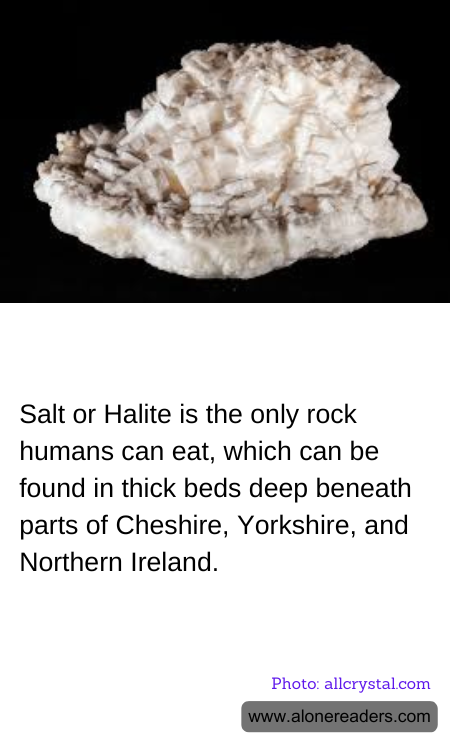
Salt, scientifically known as halite, is a unique mineral that holds a special place in human history and daily life. Unlike other rocks, salt is the only one that humans can consume, making it an essential part of our diet and culinary practices. This fascinating mineral is not only a staple in kitchens worldwide but also a significant geological feature found in various parts of the United Kingdom, particularly in Cheshire, Yorkshire, and Northern Ireland.
Halite is composed primarily of sodium chloride and forms through the evaporation of seawater in enclosed basins. Over millions of years, these processes have created extensive salt deposits, often found deep underground. In the UK, these deposits are particularly prominent in Cheshire, where salt mining has been a crucial industry for centuries. The county's rich salt beds have been exploited since Roman times, contributing significantly to the local economy and culture.
In Yorkshire, the story of salt is equally intriguing. The region's salt deposits are part of a larger geological formation that stretches across the North of England. These deposits are remnants of ancient seas that once covered the area, leaving behind thick layers of halite as they evaporated. Today, these salt beds are mined and processed, providing a vital resource for both culinary and industrial uses.
Northern Ireland also boasts significant salt deposits, particularly in County Antrim. Here, the salt is extracted from deep underground mines, where it is found in thick, crystalline layers. The mining process involves drilling and blasting to break up the rock, which is then transported to the surface for processing. The salt from Northern Ireland is renowned for its purity and quality, making it a sought-after product both domestically and internationally.
The consumption of salt is not only a matter of taste but also a necessity for human health. Sodium, a key component of salt, is essential for maintaining fluid balance, nerve function, and muscle contractions in the body. However, it is important to consume salt in moderation, as excessive intake can lead to health issues such as high blood pressure and heart disease.
Beyond its culinary uses, salt has a wide range of applications. It is used in the production of chemicals, in water treatment processes, and as a de-icing agent on roads during winter. The versatility of salt makes it an invaluable resource in various industries, highlighting its importance beyond the dining table.
In conclusion, salt or halite is a remarkable mineral that stands out as the only rock humans can eat. Its presence in the UK, particularly in Cheshire, Yorkshire, and Northern Ireland, underscores its geological and economic significance. As we continue to rely on this essential mineral, it is crucial to appreciate its role in our lives and the fascinating natural processes that have made it available to us.
