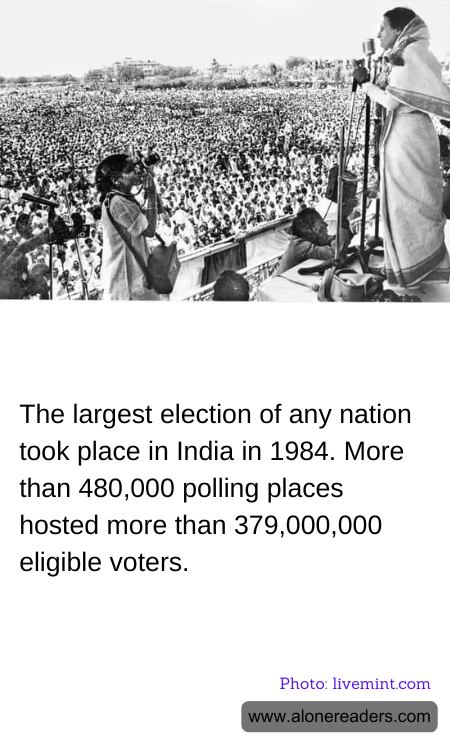
In 1984, India witnessed a remarkable event that etched its name in the annals of history as the largest election ever conducted by any nation at that time. This monumental democratic exercise was a testament to the country's commitment to upholding the principles of democracy, even amidst challenging circumstances. With over 379 million eligible voters, the scale of this election was unprecedented, showcasing the vibrancy and resilience of the world's largest democracy.
The election was held in the wake of a tumultuous period in Indian history. The assassination of Prime Minister Indira Gandhi in October 1984 had plunged the nation into a state of shock and mourning. Her tragic death led to a surge of political activity and a pressing need for stability and leadership. The subsequent general election was not only a routine democratic exercise but also a crucial moment for the nation to reaffirm its democratic values and choose a new path forward.
To accommodate the vast number of voters, more than 480,000 polling places were set up across the length and breadth of the country. This logistical feat required meticulous planning and coordination, involving thousands of election officials, security personnel, and volunteers. The sheer scale of the operation was staggering, with polling stations established in remote villages, bustling cities, and even in the most inaccessible terrains, ensuring that every eligible voter had the opportunity to cast their vote.
The election saw an impressive voter turnout, reflecting the deep-rooted democratic ethos among the Indian populace. Despite the challenges posed by the vast and diverse geography of the country, the election process was conducted smoothly, with the Election Commission of India playing a pivotal role in ensuring free and fair elections. The participation of millions of voters was a powerful reminder of the strength and resilience of Indian democracy, even in the face of adversity.
The outcome of the 1984 election was significant, with the Indian National Congress, led by Rajiv Gandhi, securing a landslide victory. This election not only marked a transition in leadership but also set the stage for a new era in Indian politics. Rajiv Gandhi's government embarked on a series of reforms aimed at modernizing the economy and improving the technological infrastructure of the country, laying the groundwork for India's future growth and development.
The 1984 Indian general election remains a landmark event in the history of democratic governance. It demonstrated the ability of a diverse and populous nation to come together and exercise its democratic rights, even during times of crisis. This election was a powerful affirmation of the enduring spirit of democracy in India, a legacy that continues to inspire and guide the nation to this day.
