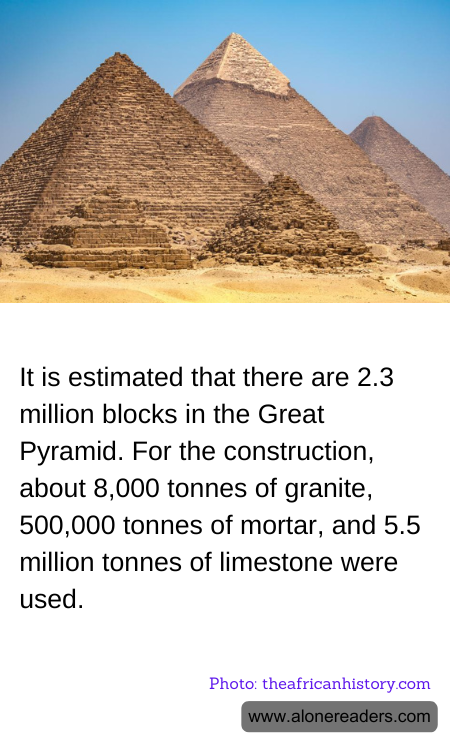
The Great Pyramid of Giza, a marvel of ancient engineering, continues to captivate the imagination of people around the world. Standing as a testament to the ingenuity and ambition of the ancient Egyptians, this monumental structure was constructed with an estimated 2.3 million blocks. Each block, meticulously placed, contributes to the grandeur and precision of the pyramid, which has stood the test of time for over 4,500 years.
The construction of the Great Pyramid required an immense amount of resources, showcasing the incredible organizational skills of the ancient builders. Approximately 8,000 tonnes of granite were used, primarily sourced from Aswan, located hundreds of miles away. Transporting these massive stones was a feat in itself, likely involving a combination of river transport and overland hauling. The granite was primarily used in the King's Chamber and other interior structures, chosen for its durability and aesthetic appeal.
In addition to granite, the construction utilized around 500,000 tonnes of mortar. This material played a crucial role in binding the stones together, ensuring the stability and longevity of the pyramid. The precise composition of the mortar remains a subject of study, as it has proven to be remarkably resilient over millennia. Its use highlights the advanced understanding of materials possessed by the ancient Egyptians.
The most abundant material used in the pyramid's construction was limestone, with an estimated 5.5 million tonnes incorporated into the structure. The limestone was quarried locally, primarily from the nearby Tura and Maadi regions. This stone formed the bulk of the pyramid's core and outer casing, giving the monument its iconic smooth, white appearance when it was first completed. Over time, much of the outer casing has been removed or eroded, but the underlying structure remains intact.
The sheer scale of the Great Pyramid's construction is a testament to the organizational prowess and labor force of ancient Egypt. It is believed that tens of thousands of workers, including skilled laborers, architects, and support staff, were involved in the project. These workers were likely organized into teams, each responsible for different aspects of the construction process. The coordination required to manage such a large workforce and the logistics of transporting and assembling millions of tonnes of material is truly astounding.
The Great Pyramid of Giza continues to be a source of fascination and study, offering insights into the technological and cultural achievements of ancient Egypt. Its construction remains one of the most impressive feats in human history, a symbol of the enduring legacy of a civilization that continues to inspire awe and wonder in people of all ages. As we continue to explore and understand this ancient wonder, the Great Pyramid stands as a reminder of the incredible capabilities of human ingenuity and determination.
