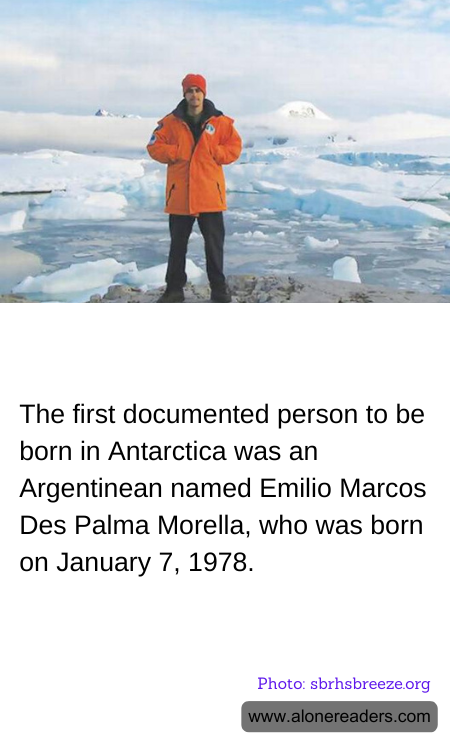
In the vast, icy expanse of Antarctica, where the landscape is dominated by snow and ice, a unique milestone in human history was quietly achieved. On January 7, 1978, Emilio Marcos Des Palma Morella became the first documented person to be born on the southernmost continent. This remarkable event not only marked a significant moment in the history of human exploration but also highlighted the geopolitical interests and scientific endeavors of nations in Antarctica.
Emilio's birth was not a mere coincidence but a carefully orchestrated event by Argentina. At the time, several countries were vying for territorial claims and influence in Antarctica, a region governed by the Antarctic Treaty System, which prohibits military activity and supports scientific cooperation. By ensuring the birth of an Argentine citizen on the continent, Argentina aimed to strengthen its presence and reinforce its territorial claims in the region. Emilio's parents, Captain Jorge Emilio Palma and his wife Silvia Morella de Palma, were stationed at the Argentine Esperanza Base, one of the permanent research stations on the continent, when Silvia gave birth to Emilio.
The birth of Emilio Marcos Des Palma Morella was a testament to the human spirit and the desire to explore and inhabit even the most inhospitable places on Earth. It underscored the lengths to which nations were willing to go to assert their presence in Antarctica. The event was widely covered in the media, capturing the imagination of people around the world and drawing attention to the unique challenges and opportunities presented by life on the frozen continent.
Emilio's birth also highlighted the importance of scientific research and international cooperation in Antarctica. The continent is home to numerous research stations operated by various countries, all dedicated to studying the Earth's climate, wildlife, and geology. These efforts have led to significant discoveries about our planet and have fostered a spirit of collaboration among nations, transcending political boundaries in the pursuit of knowledge.
Today, Emilio Marcos Des Palma Morella's birth remains a symbolic reminder of the human capacity to adapt and thrive in extreme environments. It serves as a historical footnote in the ongoing story of Antarctica, a continent that continues to captivate scientists, adventurers, and policymakers alike. As the world grapples with the challenges of climate change and environmental conservation, the lessons learned from Antarctica's unique ecosystem and the spirit of international cooperation it inspires are more relevant than ever.
In conclusion, the birth of Emilio Marcos Des Palma Morella in Antarctica was a landmark event that went beyond the personal story of a family. It was a strategic move by Argentina, a testament to human resilience, and a reminder of the importance of scientific exploration and international collaboration. As we look to the future, the legacy of Emilio's birth continues to inspire those who seek to understand and protect our planet's most remote and fragile environments.
