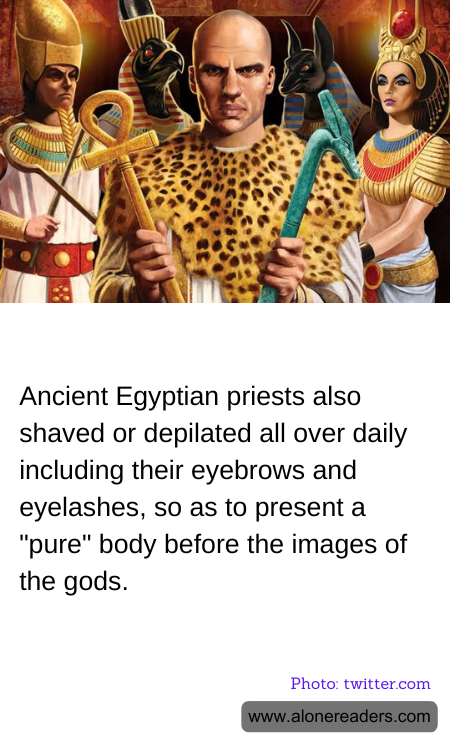
In the ancient world, the civilization of Egypt stands out for its remarkable advancements in various fields, including religion, architecture, and personal grooming. Among the intriguing aspects of their culture was the meticulous grooming practices of Egyptian priests, who adhered to strict rituals to maintain a state of purity. One of the most fascinating rituals involved the daily shaving or depilation of their entire bodies, including eyebrows and eyelashes, to present a "pure" body before the images of the gods.
The ancient Egyptians held cleanliness and purity in high regard, especially when it came to religious practices. Priests, who served as intermediaries between the gods and the people, were expected to embody the highest standards of purity. This was not merely a matter of personal hygiene but a spiritual necessity. The belief was that any form of body hair could harbor impurities, which might offend the deities they served. Thus, the removal of hair was seen as a crucial step in maintaining a sacred state.
The process of depilation was rigorous and required daily attention. Priests used various tools and methods to achieve their hairless appearance. Razors made from copper or bronze were commonly used, and a mixture of natural ingredients, such as beeswax and sugar, might have been employed for depilation. This practice extended to all visible hair, including eyebrows and eyelashes, underscoring the commitment to presenting a completely pure form.
This grooming ritual was deeply symbolic. By removing all hair, priests symbolically stripped away any earthly impurities, aligning themselves more closely with the divine. It was believed that this physical manifestation of purity would facilitate a more direct and untainted communication with the gods. The priests' dedication to this practice highlights the profound connection between physical appearance and spiritual devotion in ancient Egyptian culture.
Moreover, the practice of depilation was not limited to priests alone. It was a widespread custom among the Egyptian elite, reflecting broader societal values that equated hairlessness with cleanliness and purity. However, for priests, this ritual held an elevated significance, as it was directly tied to their sacred duties and responsibilities.
The meticulous grooming habits of ancient Egyptian priests offer a fascinating glimpse into the cultural and religious life of one of history's most enigmatic civilizations. Their commitment to presenting a "pure" body before the gods underscores the profound reverence they held for their deities and the lengths they would go to maintain spiritual integrity. This practice, while seemingly extreme by modern standards, was a testament to the intricate relationship between physical appearance and religious devotion in ancient Egypt, a civilization that continues to captivate our imagination today.
