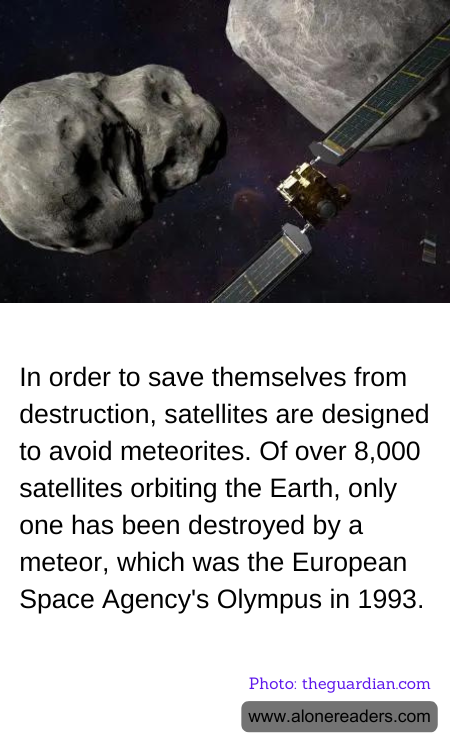
Satellites play a crucial role in modern life, enabling everything from global communication to weather forecasting and navigation. With over 8,000 satellites currently orbiting the Earth, the risk of collision with space debris or meteorites is a significant concern. However, thanks to advanced design and technology, satellites are equipped to avoid such catastrophic events, ensuring their longevity and functionality.
The vast expanse of space is not as empty as it might seem. It is filled with natural and man-made objects, including meteorites, which are small fragments of asteroids or comets. These can travel at speeds of up to 72 kilometers per second, posing a potential threat to satellites. Despite this, the likelihood of a satellite being struck by a meteorite is remarkably low. This is due in part to the vastness of space and the relatively small size of satellites compared to the vast area they occupy.
To mitigate the risk of collision, satellites are designed with several protective measures. One of the primary strategies is the use of shielding, which can help absorb the impact of smaller meteorites. Additionally, satellites are equipped with sensors and tracking systems that allow them to detect potential threats and adjust their orbits accordingly. This capability to maneuver is crucial in avoiding collisions with both meteorites and other space debris.
Remarkably, in the history of satellite operations, only one satellite has been confirmed to have been destroyed by a meteorite. This was the European Space Agency's Olympus satellite, which met its demise in 1993. The incident highlighted the potential dangers posed by space debris and meteorites, prompting further advancements in satellite design and collision avoidance technology.
The rarity of such incidents underscores the effectiveness of current satellite design and operational strategies. Continuous monitoring of space debris and advancements in tracking technology have significantly reduced the risk of collision. Organizations like NASA and the European Space Agency work tirelessly to track objects in space and provide timely warnings to satellite operators, allowing them to take evasive action when necessary.
As the number of satellites in orbit continues to grow, so too does the importance of maintaining and improving these protective measures. The development of new technologies, such as more advanced sensors and autonomous collision avoidance systems, promises to further enhance the safety and reliability of satellites. This ongoing innovation ensures that satellites can continue to serve their vital functions without the looming threat of destruction from meteorites.
In conclusion, while the risk of a satellite being destroyed by a meteorite is not zero, it is exceedingly rare. Through careful design, advanced technology, and vigilant monitoring, satellites are well-equipped to navigate the challenges of space, ensuring their continued operation and the myriad benefits they provide to life on Earth.
