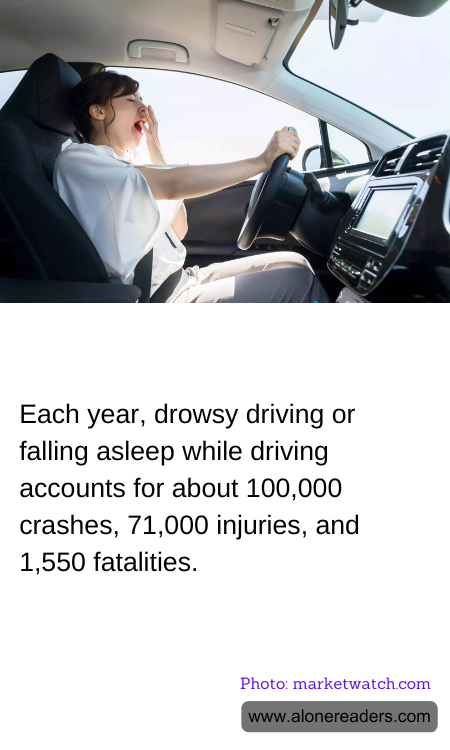
Drowsy driving is a silent yet deadly threat on our roads, responsible for a staggering number of accidents each year. According to statistics, drowsy driving or falling asleep at the wheel accounts for approximately 100,000 crashes annually. These incidents result in around 71,000 injuries and tragically claim about 1,550 lives. These numbers highlight the critical need for awareness and preventive measures to combat this often-overlooked hazard.
The dangers of drowsy driving are comparable to those of driving under the influence of alcohol. When a driver is sleep-deprived, their reaction times slow down, their attention span diminishes, and their ability to make sound judgments is impaired. This combination of factors can lead to catastrophic consequences on the road. Unlike alcohol, however, there is no breathalyzer test for drowsiness, making it a more insidious risk that can affect anyone, regardless of age or driving experience.
Several factors contribute to drowsy driving, including long work hours, irregular sleep patterns, and untreated sleep disorders such as sleep apnea. Shift workers, commercial drivers, and young adults are particularly vulnerable to driving while fatigued. The modern lifestyle, with its emphasis on productivity and long hours, often leads individuals to sacrifice sleep, inadvertently putting themselves and others at risk.
Preventing drowsy driving requires a multifaceted approach. Public awareness campaigns play a crucial role in educating drivers about the dangers of driving while tired. Encouraging regular sleep schedules and recognizing the signs of fatigue can help individuals make informed decisions about when it is safe to drive. Employers can also contribute by promoting healthy work-life balance and ensuring that employees have adequate rest, especially those in professions that require long hours behind the wheel.
Technological advancements offer promising solutions to mitigate the risks associated with drowsy driving. Many modern vehicles are equipped with driver-assistance systems that can detect signs of drowsiness, such as lane drifting or erratic steering, and alert the driver. These systems, while not foolproof, provide an additional layer of safety and can prevent potential accidents.
Ultimately, the responsibility to combat drowsy driving lies with each individual. Recognizing the importance of adequate rest and understanding the risks associated with fatigue can save lives. By prioritizing sleep and making conscious decisions to avoid driving when tired, we can all contribute to safer roads for everyone. As a community, raising awareness and supporting initiatives aimed at reducing drowsy driving can lead to a significant decrease in the number of crashes, injuries, and fatalities each year.
