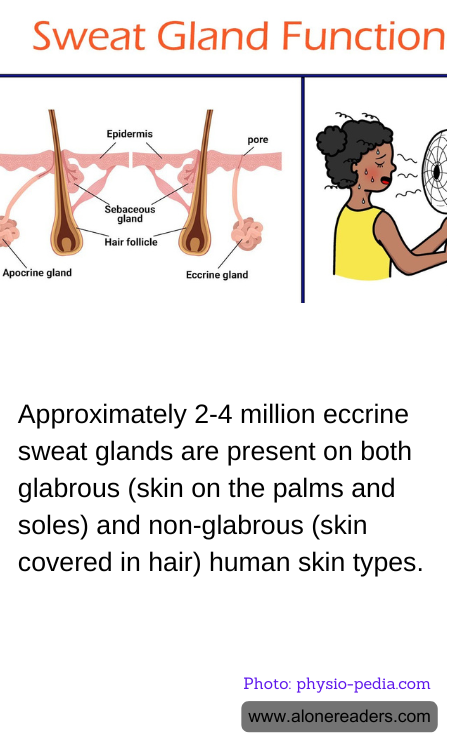
The human body is a marvel of biological engineering, with various systems working in harmony to maintain balance and health. Among these systems, the integumentary system, which includes the skin, plays a crucial role in protecting the body and regulating temperature. A key component of this system is the eccrine sweat glands, which are responsible for producing sweat. These tiny, tubular structures are distributed across nearly every part of the human body, with an estimated 2 to 4 million eccrine sweat glands present on both glabrous and non-glabrous skin.
Eccrine sweat glands are most densely located on the palms of the hands and the soles of the feet, areas known as glabrous skin. This type of skin is hairless and is designed to provide a firm grip and tactile sensitivity. The high concentration of sweat glands in these areas is essential for thermoregulation and maintaining a stable internal environment. When the body heats up, whether due to external temperatures or physical exertion, these glands secrete sweat, which cools the skin as it evaporates, helping to lower the body's temperature.
In contrast, non-glabrous skin, which covers the rest of the body and is characterized by the presence of hair, also contains eccrine sweat glands, though they are less densely packed than in glabrous regions. Despite this difference in density, the function of these glands remains the same: to regulate body temperature and maintain homeostasis. The sweat produced by these glands is primarily composed of water, with small amounts of salts and other substances, and it plays a vital role in keeping the skin hydrated and free from harmful bacteria.
The distribution and function of eccrine sweat glands highlight the body's remarkable ability to adapt to various environmental conditions. In hot climates, for instance, these glands work overtime to produce more sweat, ensuring that the body remains cool and comfortable. Conversely, in cooler environments, the activity of these glands decreases, conserving water and maintaining the body's internal balance.
Understanding the role of eccrine sweat glands not only provides insight into the body's complex regulatory mechanisms but also underscores the importance of maintaining skin health. Proper hydration, a balanced diet, and regular skincare routines can support the optimal functioning of these glands, ensuring that they continue to perform their vital roles effectively.
In conclusion, the presence of 2 to 4 million eccrine sweat glands across both glabrous and non-glabrous skin types is a testament to the body's intricate design and its ability to maintain equilibrium in varying conditions. These glands are essential for thermoregulation, hydration, and protection, making them a crucial component of the body's overall health and well-being.
