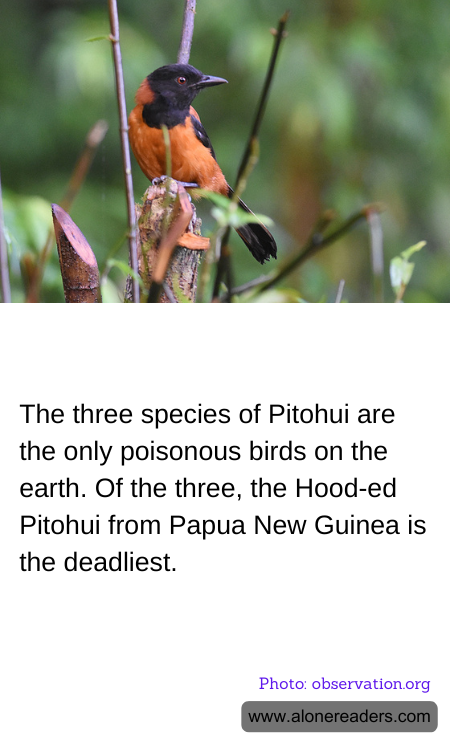
In the lush, vibrant rainforests of Papua New Guinea, an extraordinary avian species thrives, captivating the curiosity of ornithologists and nature enthusiasts alike. Among the myriad of bird species that populate the Earth, the Pitohui stands out as a unique marvel of nature. What sets these birds apart is their remarkable distinction as the only known poisonous birds in the world. Of the three species of Pitohui, the Hooded Pitohui is recognized as the most lethal, a fascinating testament to nature's ingenuity.
The Hooded Pitohui, with its striking plumage of black and orange, is not just a visual delight but also a biological wonder. This bird, along with its relatives, the Variable Pitohui and the Brown Pitohui, harbors a potent toxin known as batrachotoxin in its skin and feathers. This same toxin is famously found in the skin of certain poison dart frogs, a testament to the convergent evolution of chemical defenses in disparate species. The presence of this toxin serves as a formidable deterrent against predators, ensuring the survival of these birds in their natural habitat.
The discovery of the Pitohui's poisonous nature was a groundbreaking moment in ornithology. Scientists believe that the birds acquire the toxin through their diet, which includes certain beetles that contain batrachotoxin. This dietary adaptation allows the Pitohui to incorporate the toxin into its own body, rendering it unpalatable and dangerous to potential threats. The Hooded Pitohui, in particular, has the highest concentration of this toxin, making it the deadliest among its kin.
For the indigenous people of Papua New Guinea, the Pitohui has long been a part of their cultural tapestry. They have known about the bird's toxic properties for generations, often referring to it as the "rubbish bird" due to its inedibility. This local knowledge underscores the intricate relationship between humans and the natural world, where traditional wisdom often precedes scientific discovery.
Despite their toxic nature, Pitohuis play a vital role in their ecosystem. They are part of the intricate web of life that sustains the biodiversity of the rainforest. Their presence is a reminder of the delicate balance that exists in nature, where even the most seemingly dangerous creatures have their place and purpose.
The Hooded Pitohui and its relatives continue to intrigue scientists, offering insights into the complexities of evolutionary biology and chemical ecology. As researchers delve deeper into the mysteries of these birds, they uncover not only the secrets of the Pitohui's poison but also the broader implications for understanding the natural world's myriad adaptations.
In a world where the extraordinary often hides in plain sight, the Pitohui stands as a testament to nature's boundless creativity. These remarkable birds remind us of the wonders that await discovery in the natural world, urging us to look closer and appreciate the intricate beauty that surrounds us.
