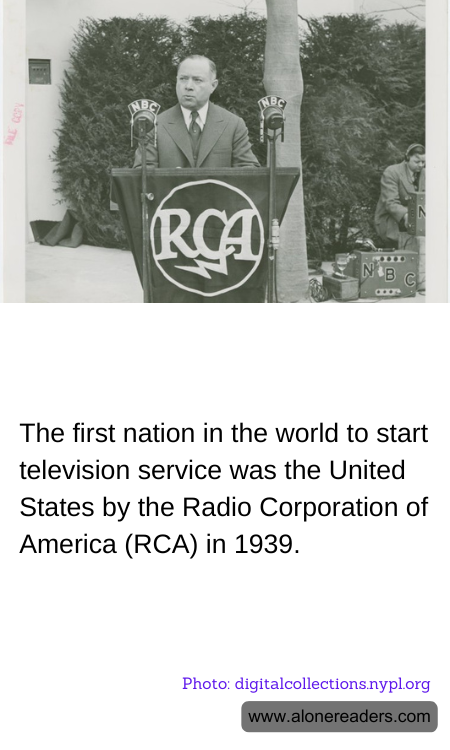
In the annals of technological advancement, the introduction of television service stands as a monumental achievement that reshaped entertainment and information dissemination. The United States holds the distinction of being the first nation to launch a regular television service, a feat accomplished by the Radio Corporation of America (RCA) in 1939. This pioneering moment marked the beginning of a new era in broadcasting, setting the stage for the global proliferation of television as a central medium in daily life.
The journey to this groundbreaking event was paved with innovation and determination. RCA, a major player in the electronics and communications industry, was at the forefront of developing television technology. Under the leadership of visionary figures like David Sarnoff, RCA invested heavily in research and development to bring the concept of television from the realm of science fiction into reality. By the late 1930s, RCA had perfected the technology to a point where it was ready for public consumption.
The official launch of television service by RCA took place at the 1939 New York World's Fair, an event that showcased the latest advancements in science and technology. On April 30, 1939, RCA President David Sarnoff delivered a speech that was broadcast live, marking the first-ever televised presidential address by Franklin D. Roosevelt. This historic broadcast was a testament to the potential of television to reach and influence a wide audience, a promise that would be fulfilled in the decades to come.
The introduction of television service in the United States was not just a technological triumph but also a cultural milestone. It transformed the way people received news, entertainment, and education, creating a shared experience that transcended geographical boundaries. Families gathered around their television sets to watch programs that ranged from news broadcasts to variety shows, fostering a sense of community and shared experience.
Despite its initial success, the early days of television were not without challenges. The technology was expensive, and the number of households with television sets was initially limited. However, as production costs decreased and programming options expanded, television quickly became a staple in American homes. The post-war economic boom further accelerated the adoption of television, cementing its place as a dominant force in media.
Today, the legacy of RCA's pioneering efforts in 1939 is evident in the ubiquitous presence of television in homes around the world. The medium has evolved dramatically, with advancements in color broadcasting, cable television, and digital streaming, yet the core concept remains the same: to inform, entertain, and connect people. As we reflect on the origins of television service, we recognize the profound impact it has had on society and the enduring legacy of those early innovators who dared to dream of a world connected by moving images.
