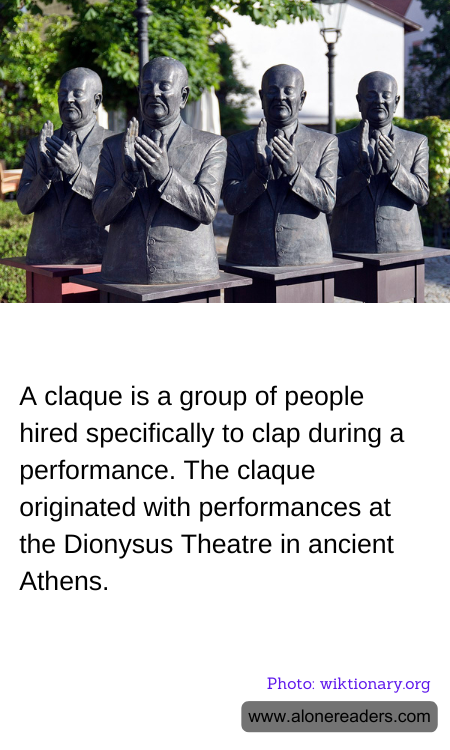
In the world of performing arts, the audience's reaction can make or break a show. One intriguing aspect of this dynamic is the concept of the "claque," a group of people hired specifically to applaud during performances. This practice, which might seem peculiar to some, has its roots deeply embedded in the history of theater, dating back to ancient Athens.
The origins of the claque can be traced to the Dionysus Theatre in Athens, a place where drama and performance were integral to cultural and religious life. The theater was named after Dionysus, the Greek god of wine, fertility, and theater, and it was here that the seeds of organized audience response were sown. In ancient Athens, theater was not just entertainment; it was a vital part of civic life, with performances often reflecting societal values and political themes.
In this vibrant theatrical environment, the claque emerged as a strategic tool to influence the reception of a play. The concept was simple yet effective: a group of individuals would be strategically placed within the audience to ensure that applause and cheers were delivered at the right moments. This orchestrated response could sway the rest of the audience, creating an atmosphere of enthusiasm and approval that might not have been entirely organic.
The use of a claque was not merely about boosting a performance's popularity; it was also a way to support playwrights and actors, ensuring their work received the recognition it deserved. In a competitive theatrical landscape, where reputations could be made or broken by public opinion, the claque provided a form of insurance against indifference or hostility.
As theater evolved, so did the practice of employing a claque. It spread beyond the confines of ancient Greece, finding its way into Roman theaters and eventually into the opera houses and theaters of Europe. In 19th-century Paris, the claque became a well-organized and professionalized entity, with leaders known as "chef de claque" orchestrating the applause with precision.
While the concept of a claque might seem outdated in today's world, where authenticity and genuine audience reactions are highly valued, its historical significance cannot be overlooked. The claque highlights the timeless desire of performers and producers to connect with their audience and ensure their work is appreciated. It also serves as a reminder of the power of perception and the lengths to which people will go to shape it.
In contemporary times, the claque has largely faded into obscurity, replaced by more subtle forms of audience engagement and marketing. However, its legacy lives on as a fascinating chapter in the history of theater, illustrating the enduring relationship between performers and their audiences. Whether in ancient Athens or modern-day theaters, the applause remains a universal language of appreciation, echoing through the ages.
