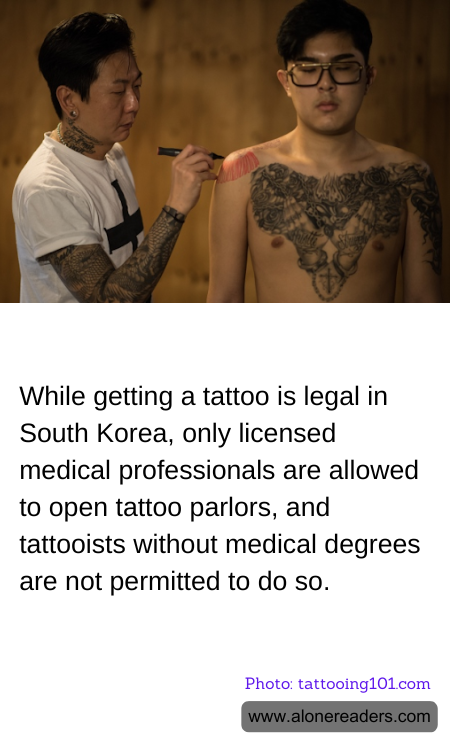
In South Korea, the art of tattooing exists in a unique legal landscape that sets it apart from many other countries. While getting a tattoo is entirely legal, the practice is tightly regulated, with only licensed medical professionals permitted to open tattoo parlors. This regulation stems from a law that classifies tattooing as a medical procedure, requiring practitioners to hold a medical degree. Consequently, talented tattoo artists without such qualifications find themselves navigating a complex and often restrictive environment.
The roots of this regulation can be traced back to concerns about hygiene and safety. The South Korean government maintains that tattooing involves skin penetration and potential exposure to blood, thus necessitating a medical background to ensure proper sterilization and infection control. However, this stance has sparked considerable debate, as many argue that skilled tattoo artists are fully capable of maintaining high standards of hygiene without a medical degree. Critics of the law suggest that it stifles creativity and limits the growth of a vibrant tattoo culture, which has been gaining popularity among younger generations.
Despite these restrictions, the demand for tattoos in South Korea continues to rise, driven by changing social attitudes and the influence of global trends. Tattoos, once associated with gang affiliations and social deviance, are increasingly seen as a form of personal expression and artistry. This shift in perception has led to a burgeoning underground tattoo scene, where artists operate discreetly to avoid legal repercussions. These artists often rely on word-of-mouth referrals and social media to connect with clients, showcasing their work in private studios or even in clients' homes.
The current legal framework has prompted calls for reform from both tattoo artists and their supporters. Advocates argue for the establishment of a licensing system specifically for tattoo artists, separate from medical qualifications. Such a system could include rigorous training and certification processes to ensure that practitioners meet high standards of safety and professionalism. This approach would not only legitimize the industry but also provide consumers with greater assurance of quality and safety.
As South Korea continues to modernize and embrace diverse cultural practices, the conversation around tattooing is likely to evolve. The potential for change lies in balancing public health concerns with the recognition of tattooing as a legitimate art form. By reevaluating the current regulations, South Korea could foster a more inclusive environment that celebrates artistic expression while maintaining public safety. Until then, the country's tattoo artists remain in a state of limbo, their craft both celebrated and constrained by the law.
