In the vast tapestry of the animal kingdom, the sense of smell plays a crucial role in survival and communication. Among the many creatures that rely on this sense, elephants and dogs stand out for their remarkable olfactory capabilities. However, the way these two species utilize and maintain their sense of smell is intriguingly different, rooted in their genetic makeup and evolutionary needs.
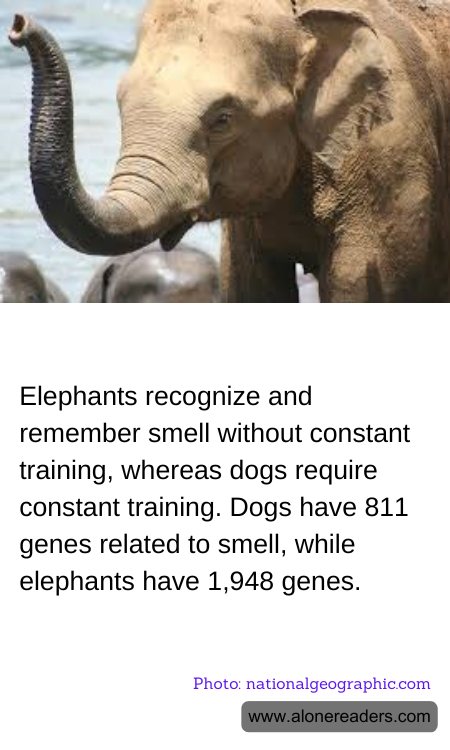
Elephants, the gentle giants of the wild, possess an extraordinary ability to recognize and remember scents without the need for constant reinforcement. This remarkable skill is largely attributed to their genetic composition. Elephants boast an impressive 1,948 genes related to smell, a number that far surpasses that of many other animals, including dogs. This extensive genetic repertoire allows elephants to detect and differentiate a vast array of scents, which is essential for their survival in the wild. Whether it's identifying the scent of a distant water source, recognizing the smell of a familiar herd member, or detecting potential threats, elephants rely heavily on their olfactory senses. Their ability to remember these scents over long periods without the need for repeated exposure is a testament to their advanced cognitive and sensory capabilities.
In contrast, dogs, often celebrated for their keen sense of smell, require regular training to maintain and enhance their olfactory skills. With 811 genes related to smell, dogs have a highly developed sense of smell, but it is not as genetically expansive as that of elephants. This means that while dogs can be trained to perform incredible feats of scent detection, such as locating missing persons or detecting contraband, they need consistent practice and reinforcement to keep their skills sharp. The domestication of dogs has also played a role in shaping their reliance on training. Over thousands of years, humans have selectively bred dogs for specific tasks, which often involve using their sense of smell. As a result, dogs have become adept at learning and adapting to new scent-related tasks, but this adaptability comes with the need for ongoing training.
The differences in olfactory capabilities between elephants and dogs highlight the diverse evolutionary paths these animals have taken. Elephants, with their vast genetic resources dedicated to smell, have evolved to rely on this sense as a primary tool for navigating their environment. Their ability to remember scents without constant reinforcement is a natural adaptation to their complex social structures and expansive habitats. On the other hand, dogs, with their fewer olfactory genes, have evolved alongside humans, developing a symbiotic relationship that emphasizes training and adaptability.
In essence, the olfactory world of elephants and dogs offers a fascinating glimpse into the interplay between genetics, evolution, and behavior. While both animals possess incredible abilities to detect and interpret scents, the underlying mechanisms and requirements for maintaining these abilities differ significantly. This distinction not only underscores the uniqueness of each species but also enriches our understanding of the natural world and the diverse ways in which animals interact with their environment.
