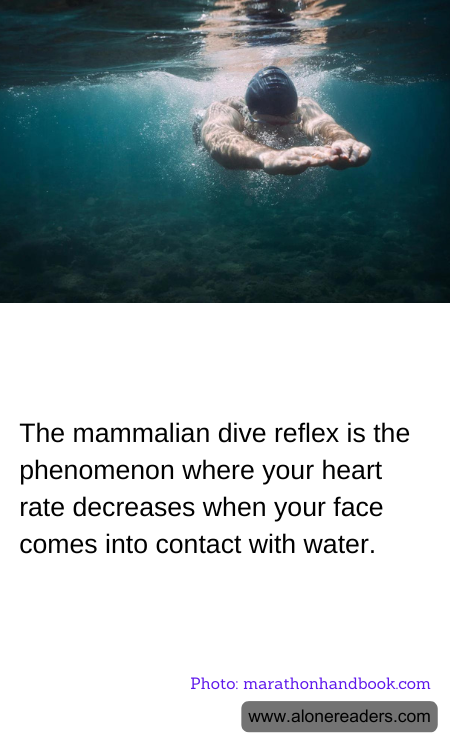
The mammalian dive reflex is a fascinating physiological response that occurs in mammals, including humans, when the face comes into contact with water. This reflex is an evolutionary adaptation that enables mammals to conserve oxygen while submerged, allowing them to stay underwater for extended periods. The primary manifestation of this reflex is a decrease in heart rate, known as bradycardia, which helps to reduce oxygen consumption by slowing down the body's metabolic processes.
When a person immerses their face in cold water, sensors in the skin trigger the dive reflex. These sensors send signals to the brain, which then activates the vagus nerve. The vagus nerve plays a crucial role in regulating heart rate, and its activation leads to a slower heartbeat. This response is more pronounced in cold water, as the temperature further stimulates the reflex, enhancing its effects. The dive reflex is not only limited to humans but is also observed in other mammals such as seals, dolphins, and whales, which rely on this mechanism to dive deep and hunt for food.
In addition to bradycardia, the mammalian dive reflex includes other physiological changes that help conserve oxygen. Blood vessels in the extremities constrict, redirecting blood flow to vital organs like the heart and brain. This process, known as peripheral vasoconstriction, ensures that these organs receive an adequate supply of oxygen even when overall oxygen levels are reduced. Furthermore, the spleen releases additional red blood cells into the bloodstream, increasing the blood's oxygen-carrying capacity.
The mammalian dive reflex is not only a subject of scientific interest but also has practical applications. It is utilized in various therapeutic and life-saving scenarios. For instance, the reflex is employed in certain medical procedures to manage conditions like supraventricular tachycardia, a type of rapid heart rate. By triggering the dive reflex through facial immersion in cold water, healthcare professionals can help slow down the heart rate and restore normal rhythm. Additionally, understanding this reflex has implications for improving the safety and effectiveness of underwater activities, such as free diving and swimming.
Despite its benefits, the dive reflex is not without limitations. It is most effective in cold water and may vary in strength among individuals. Factors such as age, fitness level, and acclimatization to cold water can influence the reflex's intensity. Moreover, while the reflex is beneficial for short-term oxygen conservation, prolonged exposure to cold water can lead to hypothermia and other health risks.
In conclusion, the mammalian dive reflex is a remarkable example of nature's ingenuity, allowing mammals to adapt to aquatic environments. By slowing the heart rate and conserving oxygen, this reflex enables mammals to explore underwater realms that would otherwise be inaccessible. Whether for scientific research, medical applications, or recreational pursuits, understanding and harnessing the dive reflex continues to offer valuable insights into the intricate relationship between humans and the natural world.
