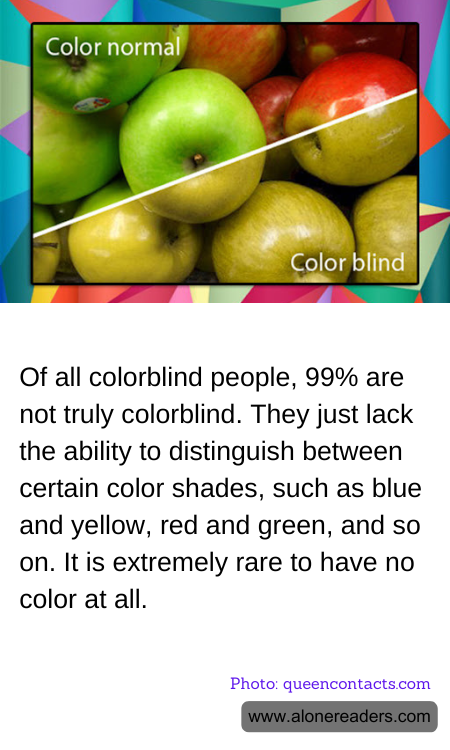
Colorblindness is a term that often conjures images of a world devoid of color, but the reality is far more nuanced. Contrary to popular belief, the vast majority of individuals who are considered colorblind are not completely unable to see color. Instead, they experience a condition known as color vision deficiency, which affects their ability to distinguish between certain shades. This condition is much more common than true colorblindness, which is an extremely rare condition where a person sees the world in shades of gray.
Approximately 99% of those who are labeled as colorblind actually have difficulty differentiating between specific colors, such as red and green or blue and yellow. This is due to anomalies in the cone cells of the retina, which are responsible for color perception. The most common form of color vision deficiency is red-green color blindness, which affects a significant portion of the population, particularly males. This type of deficiency can make it challenging to distinguish between colors that contain red or green hues, such as differentiating between a ripe tomato and a green apple.
Blue-yellow color blindness is less common and affects the ability to distinguish between shades of blue and yellow. This type of deficiency can make it difficult to differentiate between colors like blue and green or yellow and violet. Despite these challenges, individuals with color vision deficiencies often develop coping strategies to navigate their environments effectively. They may rely on context, brightness, and other visual cues to make distinctions that others might take for granted.
True colorblindness, or achromatopsia, is exceedingly rare and affects a very small fraction of the population. Individuals with this condition see the world in shades of gray, as their retinas lack functioning cone cells altogether. This condition can be more challenging to manage, as it affects not only color perception but also visual acuity and sensitivity to light.
Understanding the nuances of color vision deficiencies is important for fostering inclusivity and empathy. Many people with these conditions lead full and vibrant lives, often finding creative ways to adapt to their unique perception of the world. Advances in technology, such as color-corrective lenses and digital tools, have also provided new opportunities for those with color vision deficiencies to experience the world in more vivid detail.
In conclusion, while the term "colorblind" might suggest a complete absence of color, the reality is that most people with this condition simply perceive the world differently. By raising awareness and understanding the complexities of color vision deficiencies, we can create a more inclusive society that appreciates the diverse ways in which people experience the world around them.
