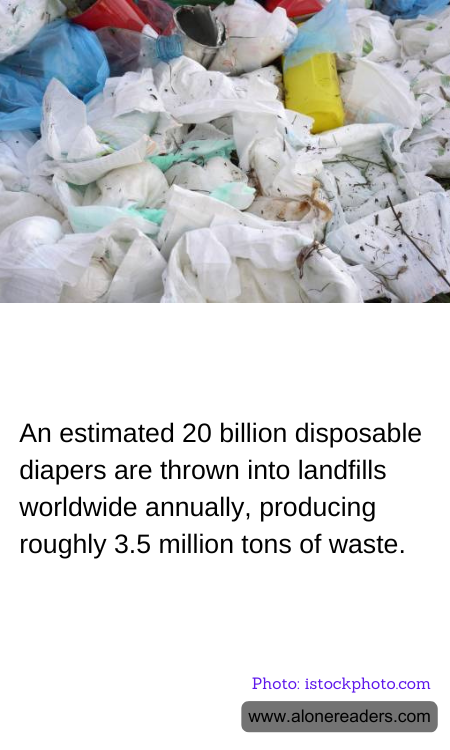
Every year, an estimated 20 billion disposable diapers are discarded into landfills across the globe, contributing to approximately 3.5 million tons of waste. This staggering figure highlights a significant environmental challenge that affects communities worldwide. Disposable diapers, while convenient for parents and caregivers, pose a long-term threat to the environment due to their non-biodegradable nature and the sheer volume in which they are used and disposed of.
Disposable diapers are primarily made from a combination of plastic, wood pulp, and superabsorbent polymers. These materials are designed to provide maximum absorbency and comfort for infants and toddlers, but they also make the diapers resistant to decomposition. It is estimated that a single disposable diaper can take up to 500 years to decompose in a landfill. This slow breakdown process means that the diapers disposed of today will remain in the environment for generations, contributing to the growing problem of landfill overcrowding.
The environmental impact of disposable diapers extends beyond just the space they occupy in landfills. The production process of these diapers involves significant resource consumption, including water, energy, and raw materials. Additionally, the manufacturing process releases greenhouse gases and other pollutants into the atmosphere, further exacerbating the environmental footprint of disposable diapers. This cycle of production, consumption, and disposal creates a continuous strain on the planet's resources and ecosystems.
In response to the environmental concerns associated with disposable diapers, many parents and caregivers are exploring more sustainable alternatives. Cloth diapers, for instance, have gained popularity as a reusable option that can significantly reduce waste. Modern cloth diapers are designed to be user-friendly, with features such as adjustable sizing and easy-to-clean materials. While they require an initial investment and regular laundering, cloth diapers can be a cost-effective and environmentally friendly choice in the long run.
Another alternative gaining traction is the use of biodegradable diapers. These diapers are made from plant-based materials that break down more quickly than traditional disposable diapers. Although they are not yet as widely available or as affordable as conventional options, biodegradable diapers offer a promising solution for reducing the environmental impact of diaper waste.
Addressing the issue of disposable diaper waste requires a collective effort from manufacturers, consumers, and policymakers. Manufacturers can invest in research and development to create more sustainable products, while policymakers can implement regulations and incentives to encourage the use of eco-friendly alternatives. Consumers, on the other hand, can make informed choices by considering the environmental impact of their purchases and opting for sustainable diapering options when possible.
Ultimately, reducing the environmental impact of disposable diapers is a crucial step towards a more sustainable future. By raising awareness and promoting the use of eco-friendly alternatives, we can work together to minimize the waste generated by disposable diapers and protect the planet for future generations.
