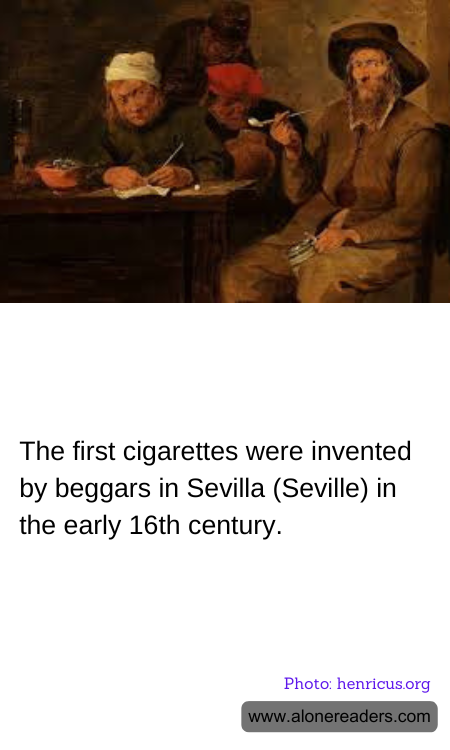
In the bustling streets of 16th-century Seville, a city renowned for its vibrant culture and historical significance, an unexpected innovation took root among the city's less fortunate inhabitants. It was here, amidst the lively markets and cobblestone alleys, that the first cigarettes were born, crafted by the resourceful hands of beggars seeking to make the most of the tobacco leaves that had recently arrived from the New World.
Tobacco, introduced to Europe by explorers returning from the Americas, quickly gained popularity for its stimulating effects and exotic allure. However, it was initially a luxury reserved for the wealthy, who indulged in the practice of smoking pipes. The beggars of Seville, ever inventive in their quest for survival, saw an opportunity in the discarded remnants of this prized commodity. They began collecting the leftover tobacco scraps, which were often thrown away by the affluent, and ingeniously wrapped them in scraps of paper, creating a rudimentary form of the cigarette.
This humble invention marked a significant departure from the traditional methods of tobacco consumption. Unlike the cumbersome pipes that required maintenance and skill, these early cigarettes were portable, easy to use, and accessible to a broader segment of society. The beggars' creation quickly gained popularity, spreading through the lower classes of Seville and eventually catching the attention of the city's wealthier residents, who were intrigued by this novel way of enjoying tobacco.
As the practice of smoking cigarettes spread, it transcended social boundaries, becoming a common pastime across Europe. The simplicity and convenience of cigarettes contributed to their rapid adoption, and by the 17th century, they had become a staple in the social and cultural fabric of European life. The beggars of Seville, in their quest for survival, had inadvertently sparked a global phenomenon.
The story of the first cigarettes is a testament to human ingenuity and adaptability. It highlights how necessity can drive innovation, even in the most unlikely of circumstances. The beggars of Seville, faced with limited resources and opportunities, managed to create something that would leave a lasting impact on the world. Their invention not only democratized the consumption of tobacco but also laid the groundwork for an industry that would grow to immense proportions in the centuries to come.
Today, the origins of the cigarette serve as a reminder of the complex interplay between culture, commerce, and innovation. While the health implications of smoking have become a significant concern in modern times, the historical journey of the cigarette from the streets of Seville to a global commodity remains a fascinating chapter in the story of human creativity and resilience.
