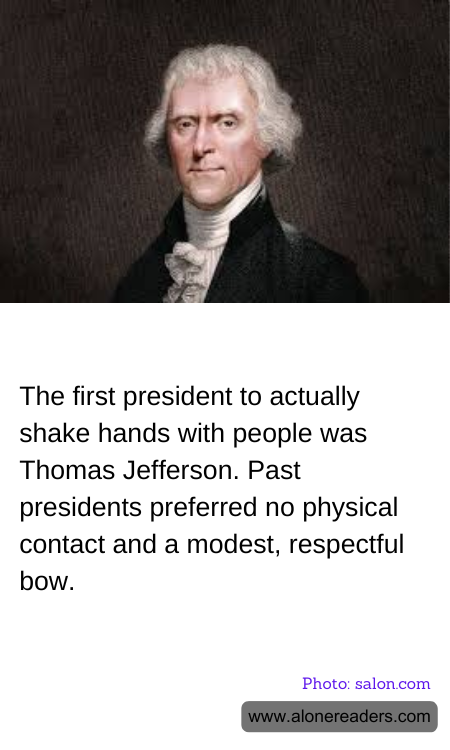
In the early days of the American presidency, the customs and protocols surrounding the office were still being defined. One of the most notable shifts in presidential etiquette came with Thomas Jefferson, the third President of the United States, who broke from tradition by choosing to shake hands with people rather than adhering to the more formal and distant practice of bowing. This seemingly simple gesture marked a significant change in how the presidency was perceived and interacted with the public.
Before Jefferson, presidents like George Washington and John Adams maintained a more reserved demeanor, reflecting the European aristocratic customs of the time. Bowing was considered a sign of respect and decorum, a way to maintain a certain level of formality and distance between the leader and the people. This practice was in line with the societal norms of the 18th century, where physical contact was often limited to those within one's social circle. The bow was a symbol of the president's elevated status and the reverence expected from the public.
Thomas Jefferson, however, was a man of the Enlightenment, deeply influenced by the ideals of equality and democracy. He believed in a more egalitarian approach to leadership, one that emphasized the connection between the government and its citizens. By choosing to shake hands, Jefferson was making a statement about the nature of American democracy. The handshake was a gesture of equality, a way to break down the barriers of class and status that a bow inherently reinforced. It was a physical manifestation of the democratic ideals that Jefferson held dear, signaling a more approachable and relatable presidency.
This change in protocol was not just a matter of personal preference but also a reflection of the evolving American identity. As the nation grew and developed its own cultural norms, the handshake became a symbol of American values—openness, friendliness, and equality. It set a precedent for future presidents, who would continue to use the handshake as a way to connect with the public and convey a sense of unity and approachability.
Jefferson's decision to shake hands rather than bow was more than just a change in social etiquette; it was a powerful statement about the kind of country America aspired to be. It underscored the belief that the president was not a distant figurehead but a leader among equals, serving the people and engaging with them directly. This shift in presidential behavior helped to shape the evolving relationship between the American people and their leaders, fostering a sense of connection and shared purpose that continues to define the presidency today.
