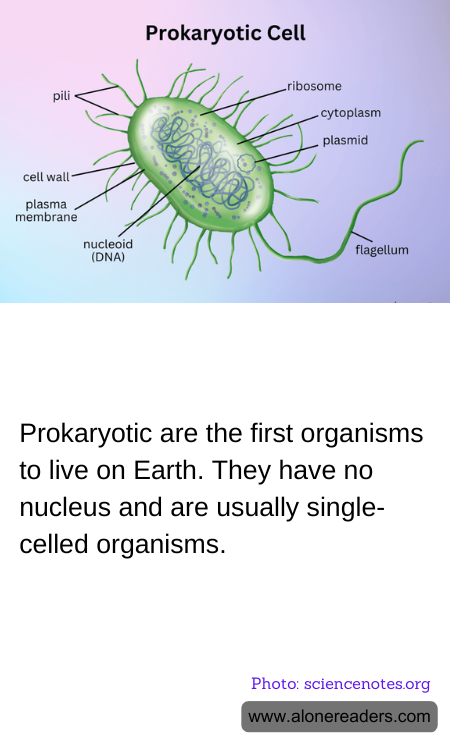
Prokaryotic organisms hold a remarkable place in the history of life on Earth, as they are believed to be the first living entities to emerge on our planet. These microscopic pioneers have existed for billions of years, long before the advent of more complex life forms. Prokaryotes are characterized by their simple structure, lacking a defined nucleus and other membrane-bound organelles, which distinguishes them from eukaryotic cells, the building blocks of plants, animals, and fungi.
The simplicity of prokaryotic cells is one of their most defining features. Unlike eukaryotic cells, which house their genetic material within a nucleus, prokaryotes have their DNA floating freely within the cell. This genetic material is typically organized in a single, circular chromosome, which allows for rapid replication and adaptation to changing environments. This adaptability has been a key factor in the survival and proliferation of prokaryotes across diverse habitats, from the depths of the ocean to the most arid deserts.
Prokaryotes are predominantly single-celled organisms, although some can form colonies or biofilms, where they work together in a cooperative manner. The two main groups of prokaryotes are bacteria and archaea. While they share many similarities, such as the absence of a nucleus, they also have distinct differences in their genetic makeup and biochemical processes. Bacteria are perhaps the most well-known prokaryotes, playing crucial roles in processes like nitrogen fixation, decomposition, and even human digestion. Archaea, on the other hand, are often found in extreme environments, such as hot springs and salt lakes, and have unique metabolic pathways that allow them to thrive where few other organisms can.
The evolutionary success of prokaryotes can be attributed to their incredible versatility and resilience. They have developed a wide array of metabolic strategies, enabling them to harness energy from various sources, including sunlight, organic compounds, and even inorganic substances like sulfur and iron. This metabolic diversity has allowed prokaryotes to colonize nearly every conceivable environment on Earth, making them one of the most widespread and abundant forms of life.
Despite their simplicity, prokaryotes have had a profound impact on the planet. They were instrumental in shaping the Earth's atmosphere, particularly through the process of photosynthesis carried out by cyanobacteria, which contributed to the oxygenation of the atmosphere billions of years ago. This event, known as the Great Oxidation Event, paved the way for the evolution of more complex, oxygen-dependent life forms.
In conclusion, prokaryotic organisms are not only the earliest inhabitants of Earth but also continue to play vital roles in maintaining ecological balance and supporting life as we know it. Their simplicity belies their complexity and adaptability, making them a fascinating subject of study for scientists and a testament to the resilience of life. As we continue to explore the depths of biology, the story of prokaryotes serves as a reminder of the humble beginnings from which all life has evolved.
