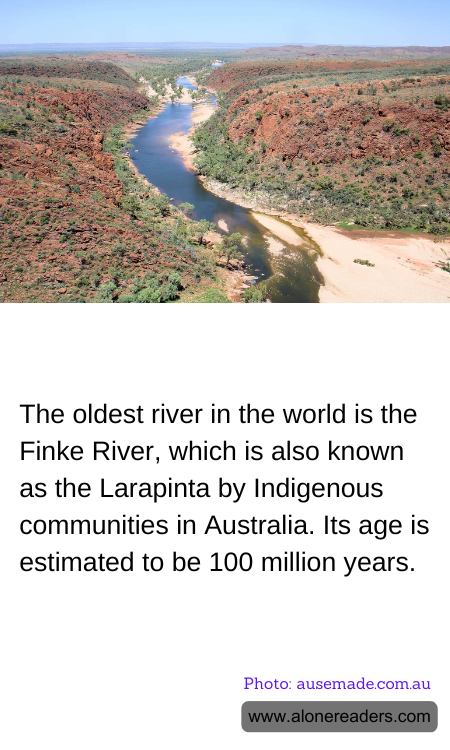
Nestled within the heart of Australia lies a natural wonder that has silently witnessed the passage of time for millions of years—the Finke River. Known as the Larapinta by Indigenous communities, this ancient river is believed to be the oldest in the world, with an estimated age of 100 million years. Its enduring presence offers a glimpse into the Earth's distant past and serves as a testament to the resilience of nature.
The Finke River meanders through the rugged landscapes of the Northern Territory, carving its path through the arid terrain of the MacDonnell Ranges. Its journey begins near Mount Zeil, the highest peak in the Northern Territory, and stretches over 600 kilometers before merging with the Simpson Desert. Despite its age, the river is ephemeral, flowing only after significant rainfall, which adds to its mystique and allure.
The river's ancient origins are a subject of fascination for geologists and historians alike. It is believed that the Finke River predates the formation of the continent's current landscape, having existed long before the tectonic shifts that shaped Australia. This remarkable longevity is attributed to the river's ability to adapt to the ever-changing environment, a characteristic that has allowed it to survive through epochs of climatic and geological upheaval.
For the Indigenous communities of the region, the Finke River holds profound cultural significance. Known as Larapinta, it is woven into the fabric of their stories, traditions, and spiritual beliefs. The river is considered a sacred entity, a living link to their ancestors and a vital part of their cultural heritage. The Indigenous people have long understood the river's rhythms, respecting its power and nurturing its ecosystems.
The Finke River's unique ecosystem supports a diverse array of flora and fauna, adapted to the harsh conditions of the Australian outback. Its banks are lined with resilient vegetation, including river red gums and coolibah trees, which provide shelter and sustenance for numerous species. The river is also home to a variety of wildlife, from birds and reptiles to fish and amphibians, all of which contribute to the rich biodiversity of the region.
In recent years, the Finke River has gained recognition not only for its age but also for its ecological and cultural importance. Efforts are being made to preserve its natural beauty and protect the delicate balance of its ecosystems. Conservation initiatives aim to ensure that this ancient river continues to flow, offering future generations the opportunity to marvel at its timeless beauty.
The Finke River, or Larapinta, stands as a symbol of endurance and continuity, a natural wonder that has withstood the test of time. Its ancient waters tell a story of resilience and adaptation, reminding us of the intricate connections between the Earth's history and the lives it sustains. As we look to the future, the Finke River remains a source of inspiration, a reminder of the enduring power of nature and the importance of preserving our planet's most precious treasures.
