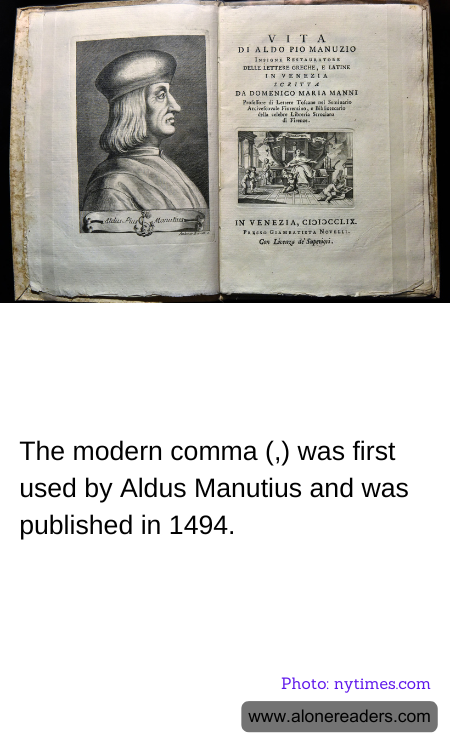
In the world of punctuation, the comma is a small but mighty tool that plays a crucial role in clarifying meaning and enhancing readability. Its origins, however, are not as widely known. The modern comma, as we recognize it today, was first used by Aldus Manutius, a Venetian printer and publisher, and made its debut in print in 1494. This innovation marked a significant development in the history of written language, influencing how we communicate in writing to this day.
Aldus Manutius was a visionary in the world of printing and publishing during the Renaissance. He founded the Aldine Press in Venice, which became renowned for producing high-quality editions of classical texts. Manutius was not only a printer but also a scholar who understood the importance of clear and precise communication. In an era when texts were often dense and difficult to read, he sought ways to improve the readability of printed works. This led to his introduction of the modern comma, a punctuation mark that would help readers navigate complex sentences and ideas more easily.
Before the advent of the modern comma, punctuation was inconsistent and varied widely across different texts and languages. Writers and scribes used a range of marks to indicate pauses or breaks in sentences, but there was no standardized system. Manutius's innovation provided a uniform way to denote a brief pause within a sentence, helping to separate ideas and clauses. This not only improved comprehension but also allowed for more nuanced expression in writing.
The introduction of the comma by Manutius was part of a broader movement towards standardization in printing and typography. His work laid the foundation for modern punctuation, influencing other printers and writers to adopt similar practices. Over time, the use of the comma became widespread, and it evolved into an essential component of written language. Today, the comma is used in various ways, from separating items in a list to setting off introductory elements and indicating direct address.
The impact of Aldus Manutius's contribution to punctuation cannot be overstated. By introducing the modern comma, he helped to shape the way we write and read, making written communication more accessible and effective. His legacy lives on in every sentence that benefits from the clarity and precision that punctuation provides. As we continue to navigate the complexities of language, the humble comma remains a testament to the enduring power of innovation in the pursuit of understanding.
