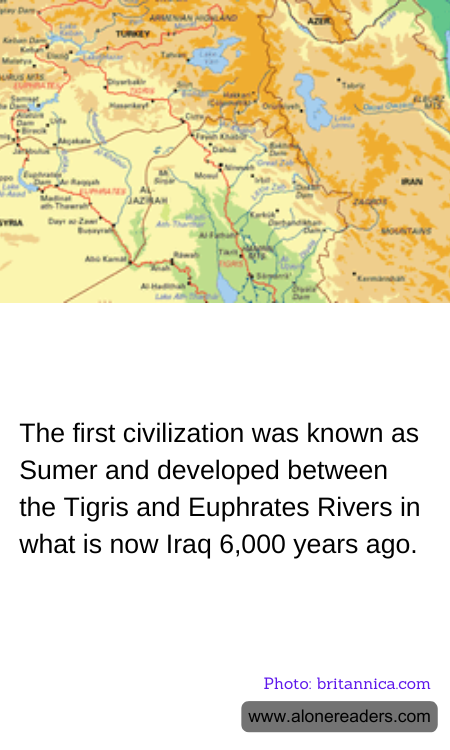
The cradle of civilization is often traced back to the ancient land of Sumer, a remarkable society that emerged around 6,000 years ago in the fertile region between the Tigris and Euphrates Rivers, in what is now modern-day Iraq. This area, known as Mesopotamia, is widely recognized as the birthplace of some of the earliest advancements in human history, laying the foundational stones for future civilizations.
Sumerians were pioneers in many aspects of society, including the development of the first known form of writing, cuneiform. This writing system began as simple pictographs and evolved into a complex script used for record-keeping, literature, and communication. The ability to document transactions and events was revolutionary, allowing the Sumerians to maintain detailed records of trade, agriculture, and governance, which in turn facilitated the growth of their society.
The Sumerians also made significant strides in architecture and urban planning. They constructed some of the world's first cities, such as Uruk, Ur, and Eridu, which were characterized by their impressive ziggurats—massive temple complexes that served as both religious and administrative centers. These cities were marvels of engineering, with sophisticated systems for irrigation and water management that supported agriculture in the arid climate.
In addition to their architectural achievements, the Sumerians were innovators in governance and law. They established one of the earliest known legal codes, which laid the groundwork for justice and order in their society. This legal framework was crucial in managing the complexities of urban life and ensuring the rights and responsibilities of individuals within the community.
The Sumerians were also adept at trade and commerce, engaging in extensive trade networks that reached far beyond their borders. They exchanged goods such as textiles, grains, and crafts with neighboring regions, which not only enriched their economy but also facilitated cultural exchanges that influenced the broader ancient world.
Religion played a central role in Sumerian life, with a pantheon of gods and goddesses who were believed to govern all aspects of the natural and human world. Temples were the focal points of religious activity, where priests conducted rituals and offerings to appease the deities and ensure the prosperity of the land.
The legacy of Sumer is profound, as it set the stage for subsequent civilizations in Mesopotamia and beyond. The innovations and cultural achievements of the Sumerians have had a lasting impact on human history, influencing everything from writing and law to architecture and religion. As the first known civilization, Sumer represents a pivotal chapter in the story of humanity, demonstrating the incredible potential of human ingenuity and cooperation.
