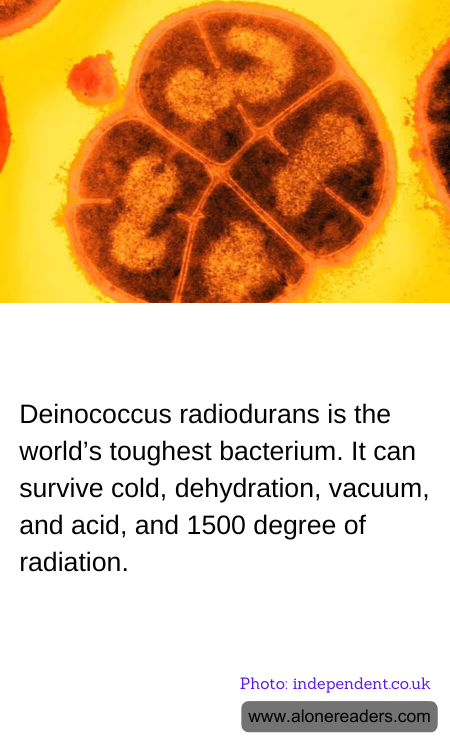
Deinococcus radiodurans, often referred to as the world's toughest bacterium, is a remarkable microorganism that has captured the fascination of scientists and the public alike. This extraordinary bacterium is renowned for its ability to withstand extreme conditions that would be lethal to most forms of life. Its resilience is not only a testament to the wonders of nature but also a potential key to advancements in various scientific fields.
One of the most astonishing features of Deinococcus radiodurans is its ability to survive high levels of radiation. While most organisms would succumb to radiation exposure of a few hundred grays, this bacterium can endure up to 1,500 grays, a level that would obliterate human cells. This capability is attributed to its efficient DNA repair mechanisms. When exposed to radiation, the DNA of Deinococcus radiodurans can break into hundreds of pieces, yet the bacterium can swiftly and accurately reassemble its genetic material, ensuring its survival and continued function.
Beyond its radiation resistance, Deinococcus radiodurans is also remarkably resilient to other extreme conditions. It can survive in the vacuum of space, withstand severe dehydration, and endure freezing temperatures. Additionally, it can thrive in acidic environments that would be inhospitable to most other life forms. This versatility makes it a subject of intense study, as understanding its survival mechanisms could lead to breakthroughs in biotechnology and medicine.
The potential applications of Deinococcus radiodurans are vast and varied. In the field of bioremediation, its ability to survive and function in radioactive environments could be harnessed to clean up nuclear waste sites. Its robust DNA repair systems might inspire new approaches to treating diseases caused by DNA damage, such as cancer. Furthermore, its resilience to extreme conditions makes it a candidate for use in space exploration, where it could help develop life-support systems for long-duration missions.
Despite its formidable capabilities, Deinococcus radiodurans remains a benign organism, posing no threat to human health. Instead, it stands as a symbol of nature's ingenuity and adaptability. As researchers continue to unravel the secrets of this remarkable bacterium, it holds the promise of contributing to solutions for some of humanity's most pressing challenges.
In conclusion, Deinococcus radiodurans is not just a scientific curiosity but a beacon of potential. Its ability to thrive in conditions that are lethal to most life forms highlights the incredible diversity and resilience of life on Earth. As we continue to explore its capabilities, this tiny bacterium may pave the way for significant advancements in science and technology, offering hope and inspiration for future generations.
