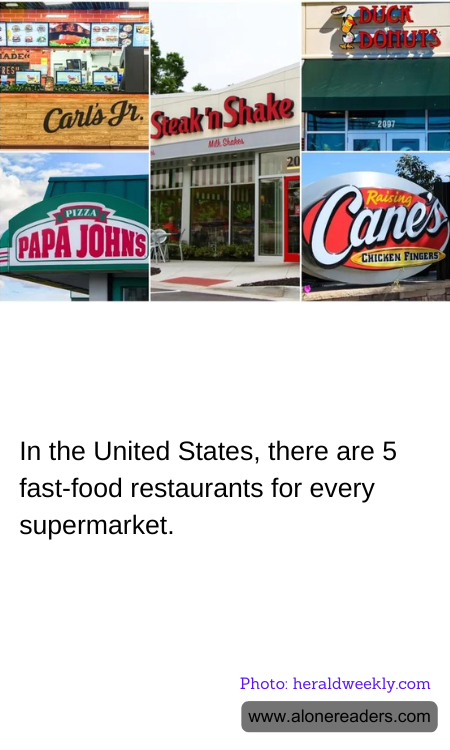
In the United States, the landscape of food consumption is dominated by a striking statistic: there are five fast-food restaurants for every supermarket. This ratio highlights a significant aspect of American culture and lifestyle, reflecting both the convenience-driven nature of modern society and the challenges faced in promoting healthier eating habits.
Fast-food restaurants have become an integral part of American life, offering quick, affordable, and tasty meals that cater to the fast-paced lifestyle of many individuals. The proliferation of these establishments can be attributed to their ability to provide a consistent and predictable dining experience, which is particularly appealing to those with busy schedules. The convenience of drive-thrus, extended hours, and locations in nearly every neighborhood make fast-food chains an accessible option for millions of Americans.
However, this convenience comes at a cost. The dominance of fast-food outlets over supermarkets raises concerns about nutritional quality and public health. Fast food is often high in calories, saturated fats, sugars, and sodium, which can contribute to a range of health issues, including obesity, heart disease, and diabetes. The easy availability of such food options can make it challenging for individuals to maintain a balanced diet, especially in areas known as "food deserts," where access to fresh produce and healthy groceries is limited.
Supermarkets, on the other hand, offer a diverse array of food choices, including fresh fruits, vegetables, whole grains, and lean proteins. These stores are essential for promoting healthy eating habits and providing the ingredients necessary for home-cooked meals. However, the lower number of supermarkets compared to fast-food restaurants suggests that many communities may not have adequate access to these healthier options. This disparity can exacerbate issues of food insecurity and nutritional inequality, particularly in low-income and rural areas.
Efforts to address this imbalance are underway, with initiatives aimed at increasing the availability of healthy food options and educating the public about nutrition. Community programs, urban farming projects, and policy changes are being implemented to encourage the establishment of more supermarkets and to make fresh produce more accessible and affordable. Additionally, some fast-food chains are responding to consumer demand for healthier options by expanding their menus to include salads, fruit, and other nutritious choices.
Ultimately, the ratio of fast-food restaurants to supermarkets in the United States reflects broader societal trends and challenges. While fast food offers convenience, it is crucial to balance this with access to healthier food options to support the well-being of individuals and communities. By fostering an environment where nutritious food is as readily available as fast food, we can work towards a healthier future for all Americans.
